Loading...
DestinationsPortugal Road Trip
Sia B.

Nov 15, 2026
Epic Portugal Road Trip: 7-day itinerary from North to South
Destinations18 minutes read


Portugal looks small on the map, so we wanted to find out how much of it one car and two people could cover. We planned a route from the far north to the southwest corner, packed our bags, and hit the road.
We drove this Portugal road trip from the northern mountains of Peneda-Gerês to the southwestern corner of Europe in Sagres in seven days, sleeping in a different town every night. It was a pretty intense trip, especially since we were also filming it, but it was still one of the best ways to see how different the country looks from one region to the next.
Here is what to do in Portugal for a week on this route:
- Granaries on stone legs in Peneda-Gerês National Park
- The zigzag staircase of Bom Jesus do Monte near Braga
- The Dom Luís I bridge in Porto and the striped palheiros near Aveiro
- Coimbra's university and the monasteries of Batalha and Alcobaça
- The surf reserve of Ericeira, the western tip of Europe at Cabo da Roca, and the wild Praia da Ursa
- Lisbon, from Baixa to Alfama and Belém
- Sagres and Cabo de São Vicente, where the Romans believed the world ended
This is the best Portugal road trip itinerary we can give you from our own experience, and it covers the whole length of the country without repeating a single stretch of road. We also think it ranks among the best road trips in Portugal for anyone who likes ocean villages, monasteries, surf towns, and viewpoints more than resort pools.
Road trip Portugal at a glance:
- Route: Peneda-Gerês in the north to Sagres in the southwest
- Time: 7 days
- Overnight stops: Porto, Aveiro, a town near Nazaré, Lisbon
- Starting time: the first week of October
- Fuel: €2.08 per liter of petrol and €2.16 per liter of diesel
- Tolls: Lisbon to Porto on the A1 costs €25.05 for a standard car, but the A22 in the Algarve is free
We filmed the whole route, and the video is coming soon. It will carry the atmosphere, while this article carries the details you need to plan the drive.
How many days do you need in Portugal?
Our trip took 7 days, and it was intense. If you want active exploration and/or are short on time, a week works. Still, we suggest 10 days for a more relaxed trip, and even more if you're planning a workation.
Deciding how many days to spend in Portugal comes down to pace. The honest answer on how long to spend in Portugal is as long as you can. The table shows what each trip length gets you.
Days | Pace | What you can add |
7 | Fast, one or two big stops per day | Not much can fit on top, but you can swap spots for those you’d like to see more |
10 | Relaxed | More time in Lisbon and Porto, Braga on day 1, the Sintra castles, more beach time |
14 | Slow | Douro valley near Porto, surf lessons in Ericeira, restaurants of traditional cuisine, Lagos and Albufeira |
A week in Portugal is enough to cross the country by car, but not enough to see Lisbon properly. We skipped Braga and missed the Sintra castles, and both would fit easily into a 10-day plan.
Best time for a Portugal road trip
We took this route in early October by our own car. The timing worked well for us.
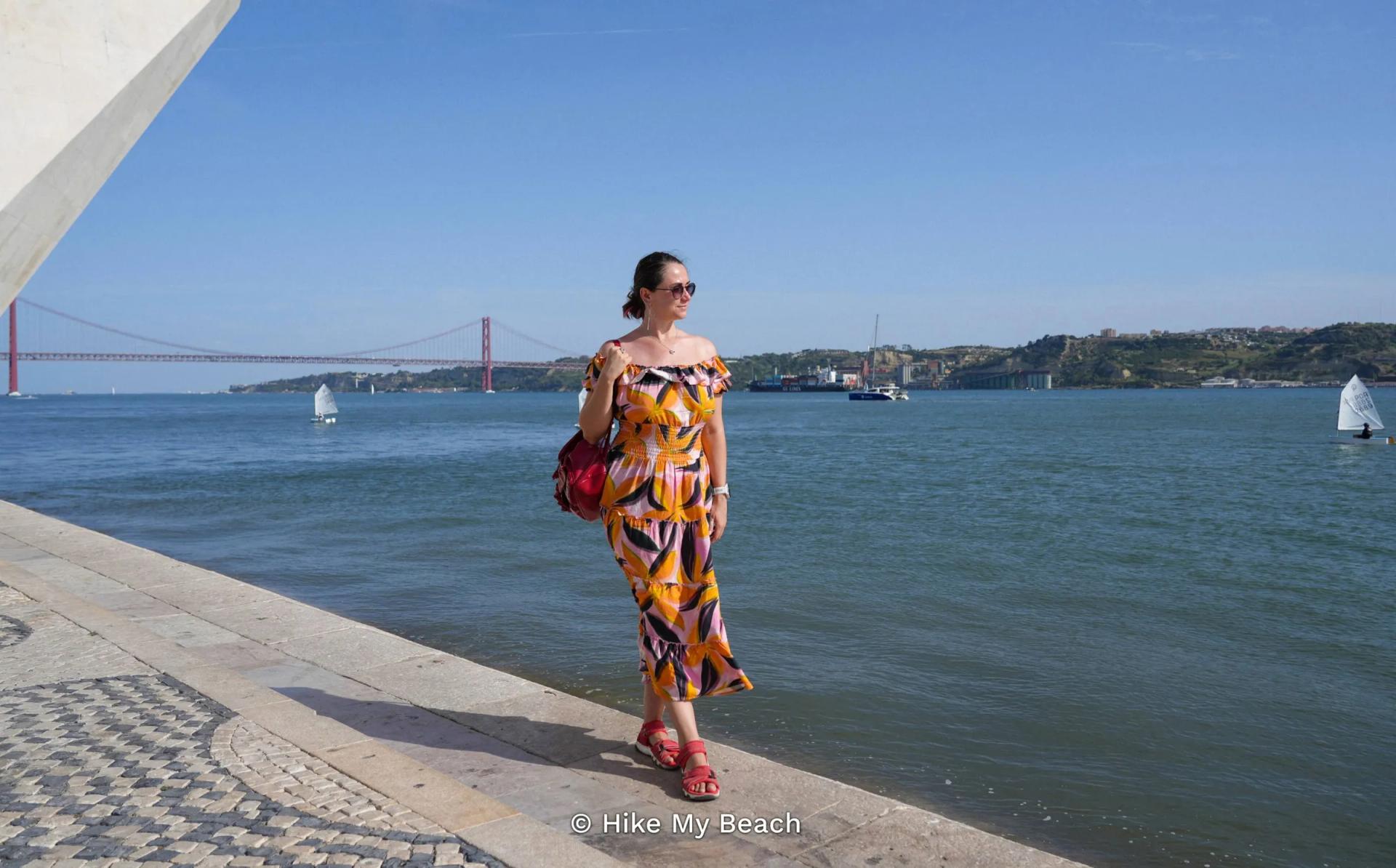
The right month for you depends mostly on one question: do you want to swim?
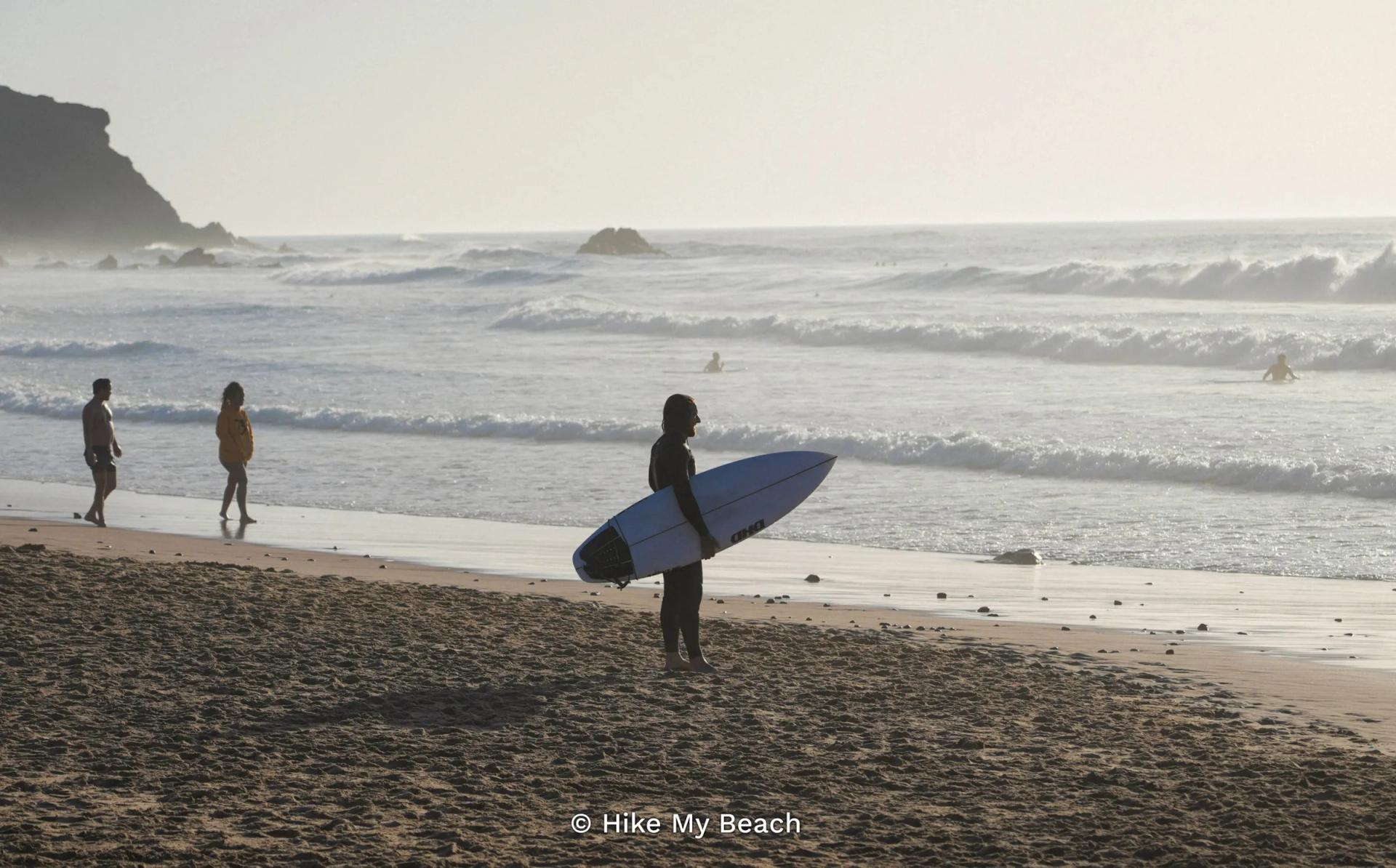
If you do, aim for late summer, when the Atlantic is at its warmest, and plan beach time in the Algarve rather than on the western coast. The ocean along the northern and central coast stays cold even in summer, and Peniche and Ericeira are better for watching surfers than for casual swimming.
If you are happy with walking, viewpoints and monasteries, October is a good fit, with fewer crowds than in peak summer. Days are shorter though, so plan the long stops for the morning.
If you are planning the trip for later in the season, our guide to winter in Portugal covers the weather, regions, and things to do.
Portugal 7 day road trip itinerary
This Portugal 7 day road trip starts in the northern mountains and ends on the Atlantic cliffs of Sagres. The table below gives you the shape of each day before the details.
Day | Route | Overnight | Rough driving time |
1 | Peneda-Gerês, Bom Jesus do Monte (Braga optional) | Porto | 4 h 30 min |
2 | Porto, Capela do Senhor da Pedra | Aveiro | 1 h 30 min |
3 | Aveiro, Gafanha da Encarnação, Coimbra, Batalha Monastery | 20 minutes from Nazaré | About 2 h 30 min |
4 | Nazaré, Monastery of Alcobaça, Peniche | Ericeira | About 2 hours |
5 | Ericeira, Cabo da Roca, Praia da Ursa | Lisbon | About 1 h 30 min |
6 | Lisbon | Lisbon | None |
7 | Scenic coastal drive to Sagres, Cabo de São Vicente | End of the trip | About 3 h 30 min |
These are our estimates, so check your own routing before you book each night.
Day 1: Peneda-Gerês and Bom Jesus
We started at a nice, clean Gerês Guest House. The first day mixed mountain scenery with a big baroque monastery near Braga.
Peneda-Gerês
We started in Peneda-Gerês, the only national park in Portugal, because it has locations that rarely reach the camera.
Helpful Tip
Leave early, because the stops are spread across mountain roads, and check current weather and road conditions before you set off.Santuário do Santo António de Mixões da Serra
This is a sanctuary of Saint Anthony in the municipality of Vila Verde, set at about 750 m beside the Miradouro de Santo António.
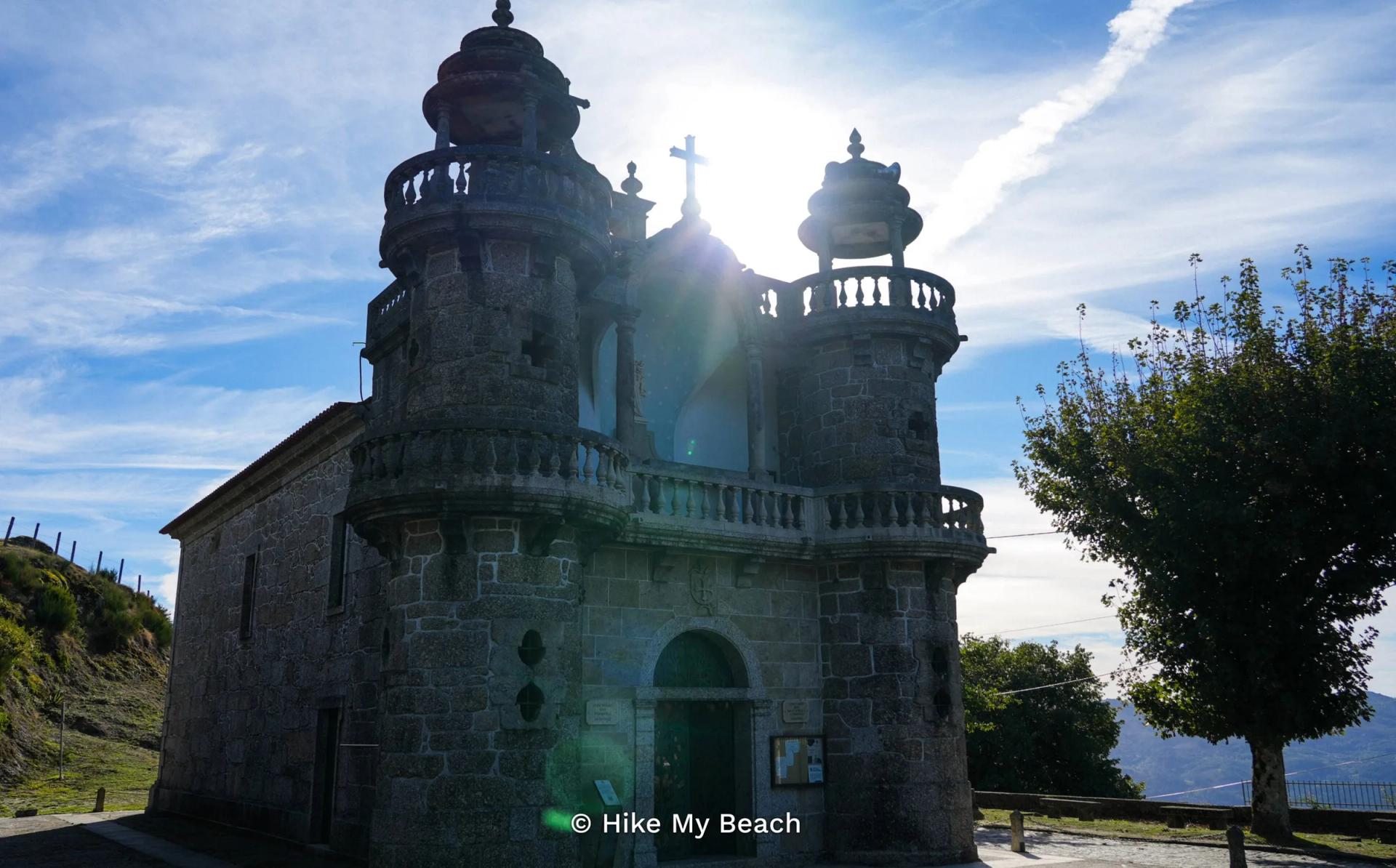
From here you look over the Cávado and Lima valleys and the mountain ranges around them. Each June, local farmers bring their animals here for a blessing, a tradition that is centuries old.
Lindoso castle and granaries
A medieval fortress sits beside dozens more granaries, and everything is a few minutes from where you park.
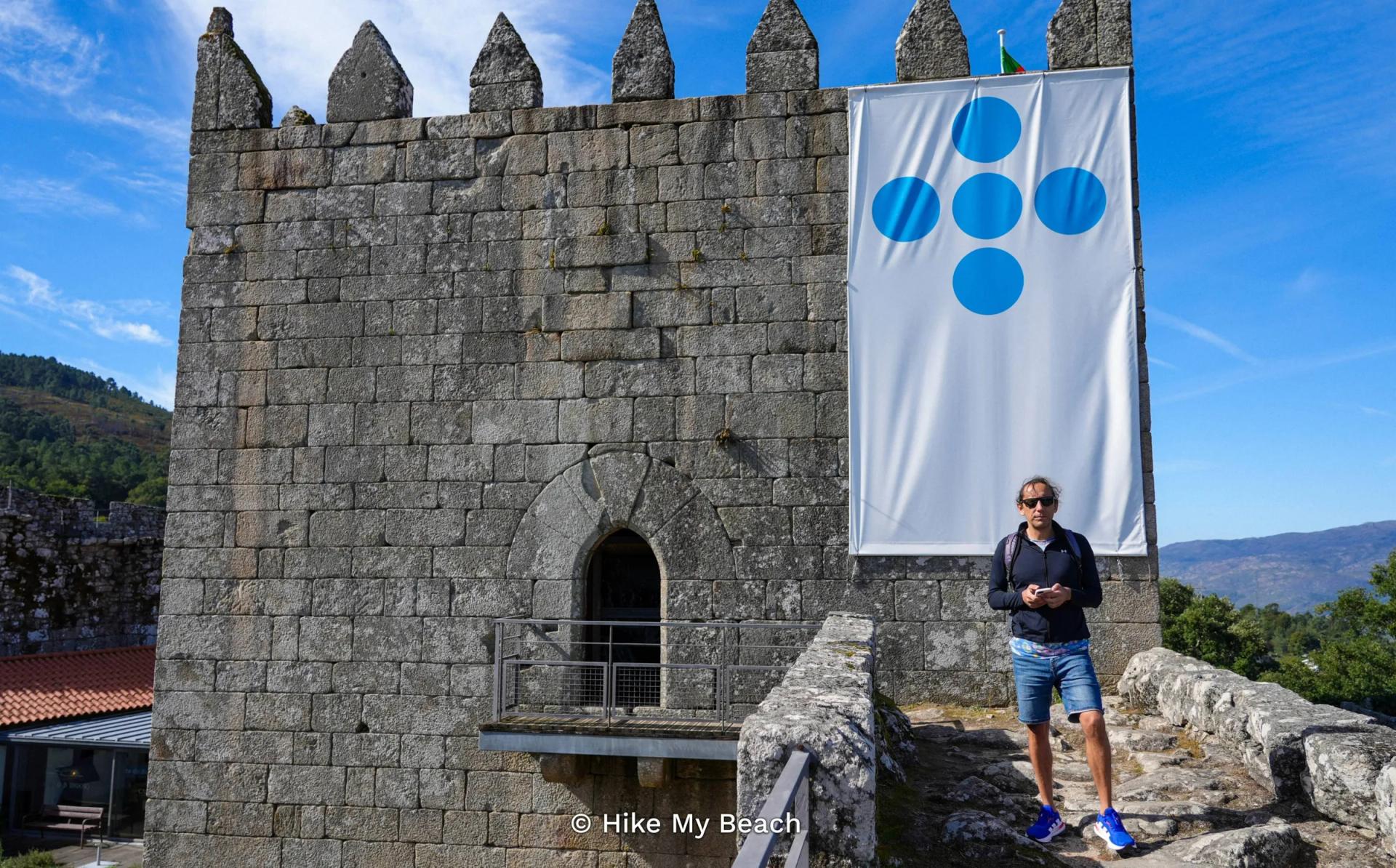
King Afonso III ordered the castle in the 13th century, and its hilltop position gave views over both Galicia and Portugal, which made it useful for surveillance, defense, and marking the border. It has Romanesque and Gothic features, became a National Monument in 1910, and was rebuilt in the 1940s.
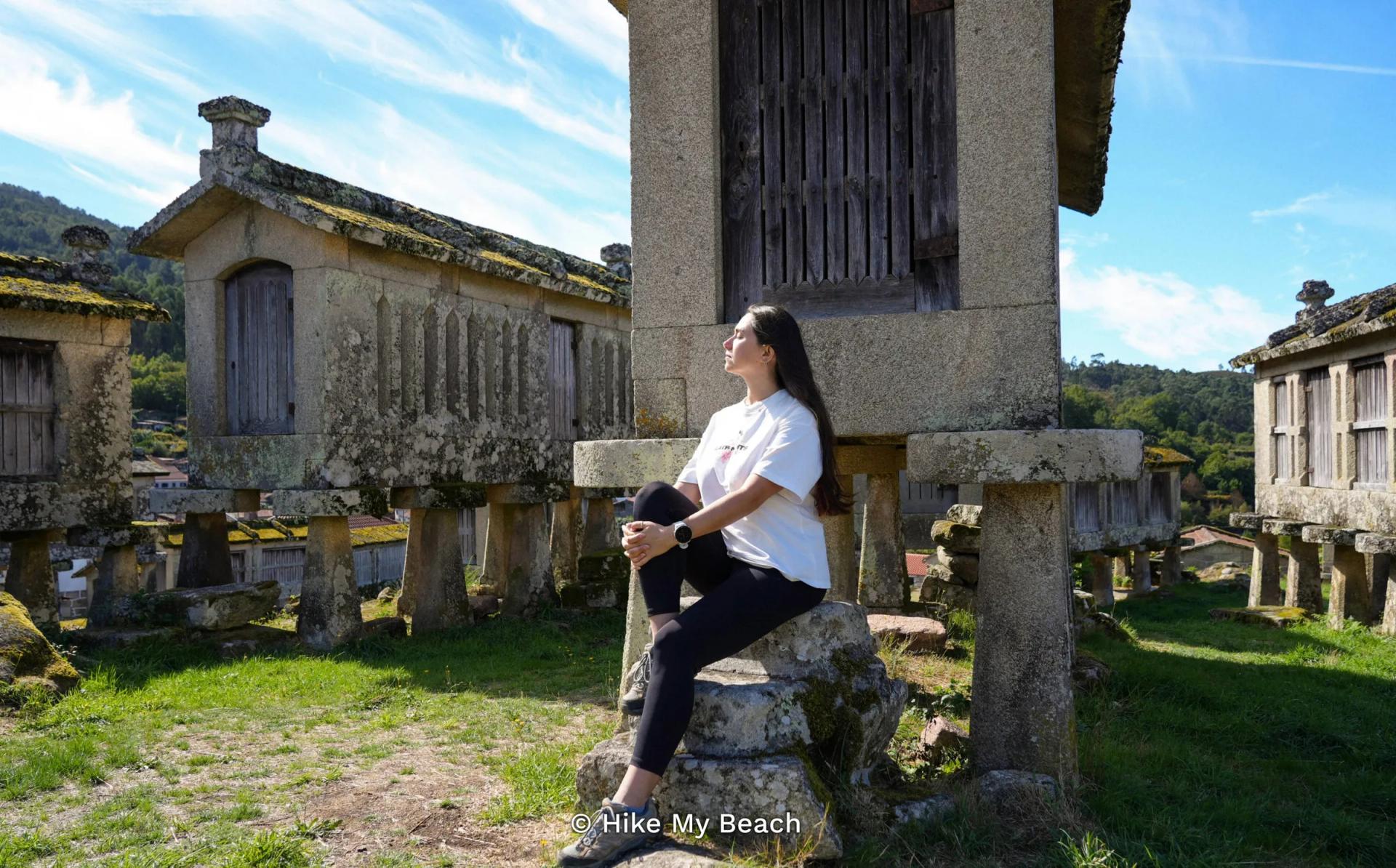
Next to it stand 64 espigueiros, stone granaries on stone legs, and some of them are up to 200 years old.
Cascata da Portela do Homem
This waterfall, also called Cascata de São Miguel, is near Portela do Homem in the parish of Campo do Gerês.
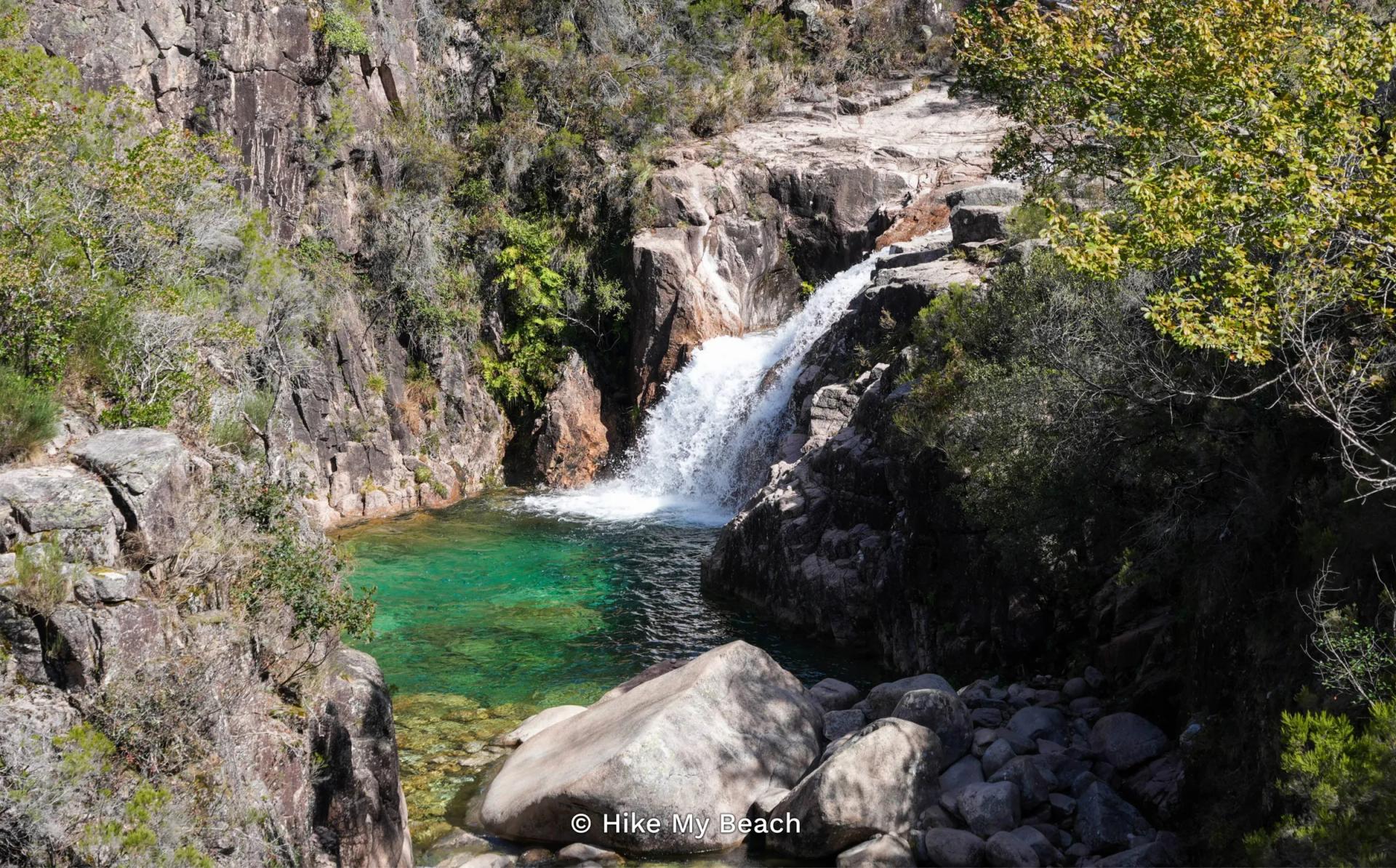
The water is clear, and the spot is popular in summer, but parking nearby is difficult, so arrive early.
Praia Fluvial de Alqueirão
This river beach sits on the Caniçada reservoir, close to Gerês, with grass and stone areas instead of a sandy beach.
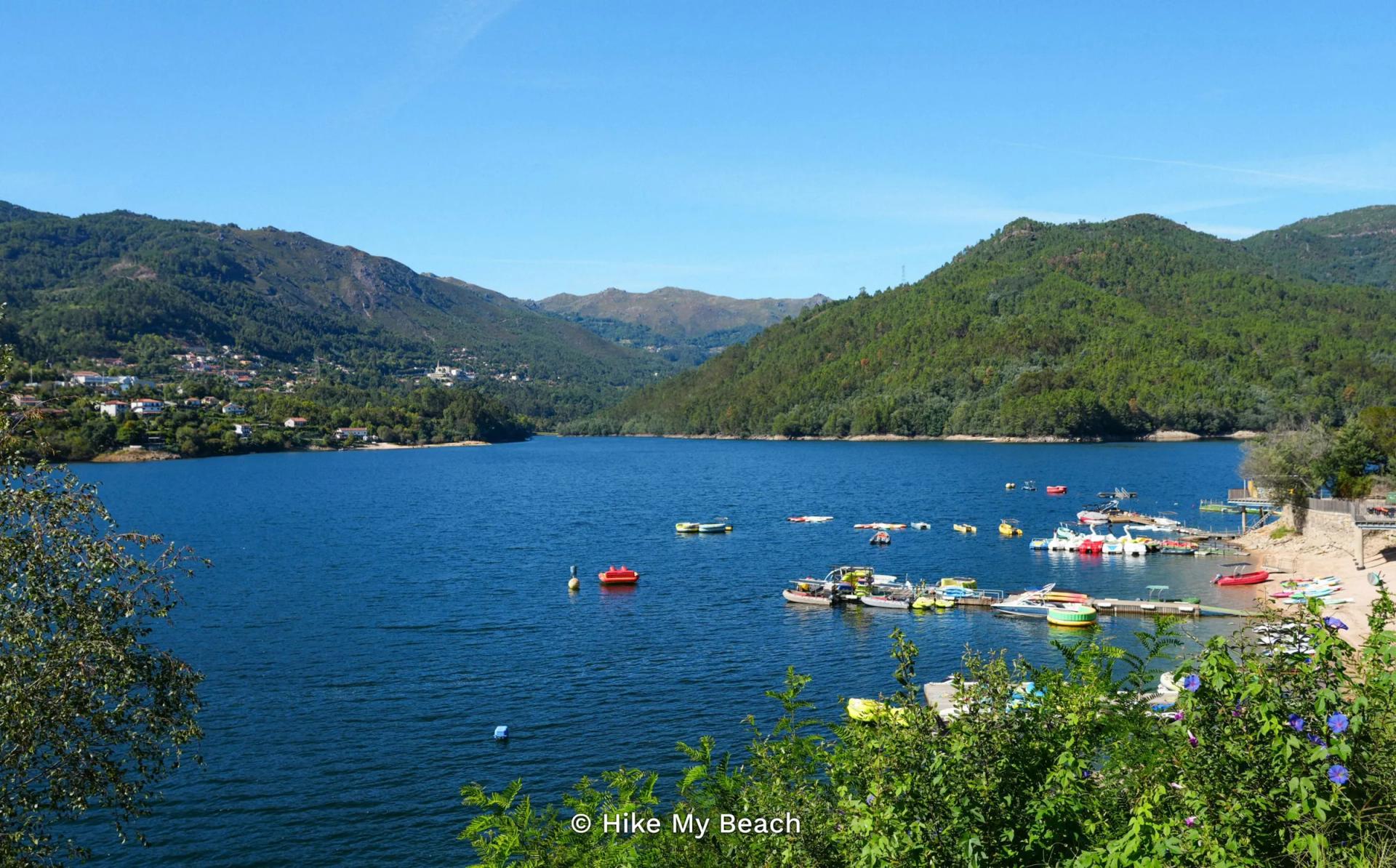
You can rent SUP boards, kayaks, and pedal boats, and there are cafés nearby. Parking along the N308 fills quickly on busy days, and the water can be deep with slippery access points, so take care if you swim.
Sanctuary of Our Lady of Lapa
The chapel is built into a natural cavity, a "lapa", under a granite rock on Monte de Penamourinho.
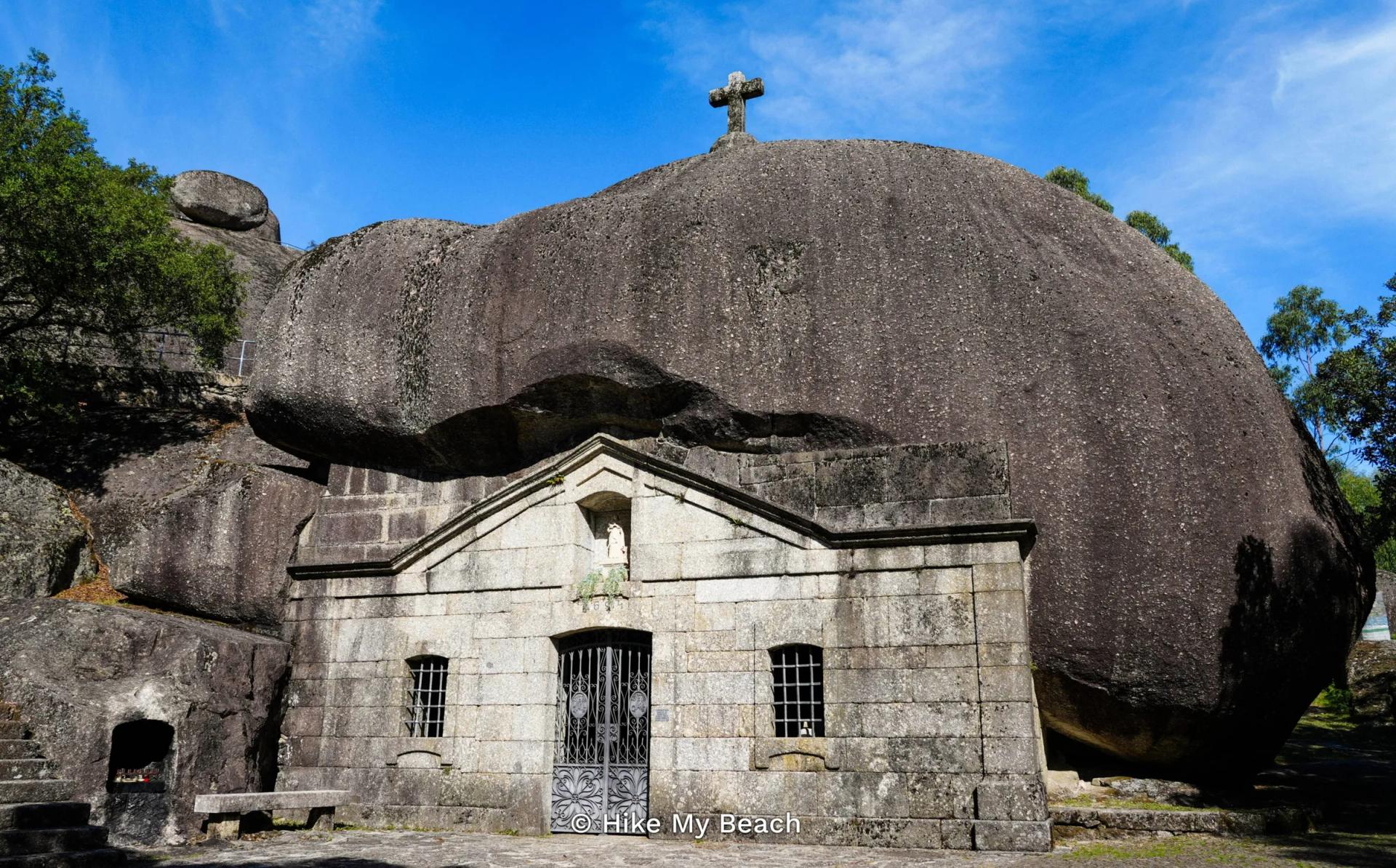
A plaque on the facade gives 1694 as the year the current chapel was built, and a side staircase leads to a viewpoint on top of the granite block. The sanctuary is in the parish of Soutelo, in the municipality of Vieira do Minho.
Bom Jesus do Monte
In the afternoon we drove to Bom Jesus do Monte, a baroque complex where the staircase zigzags up the hill.
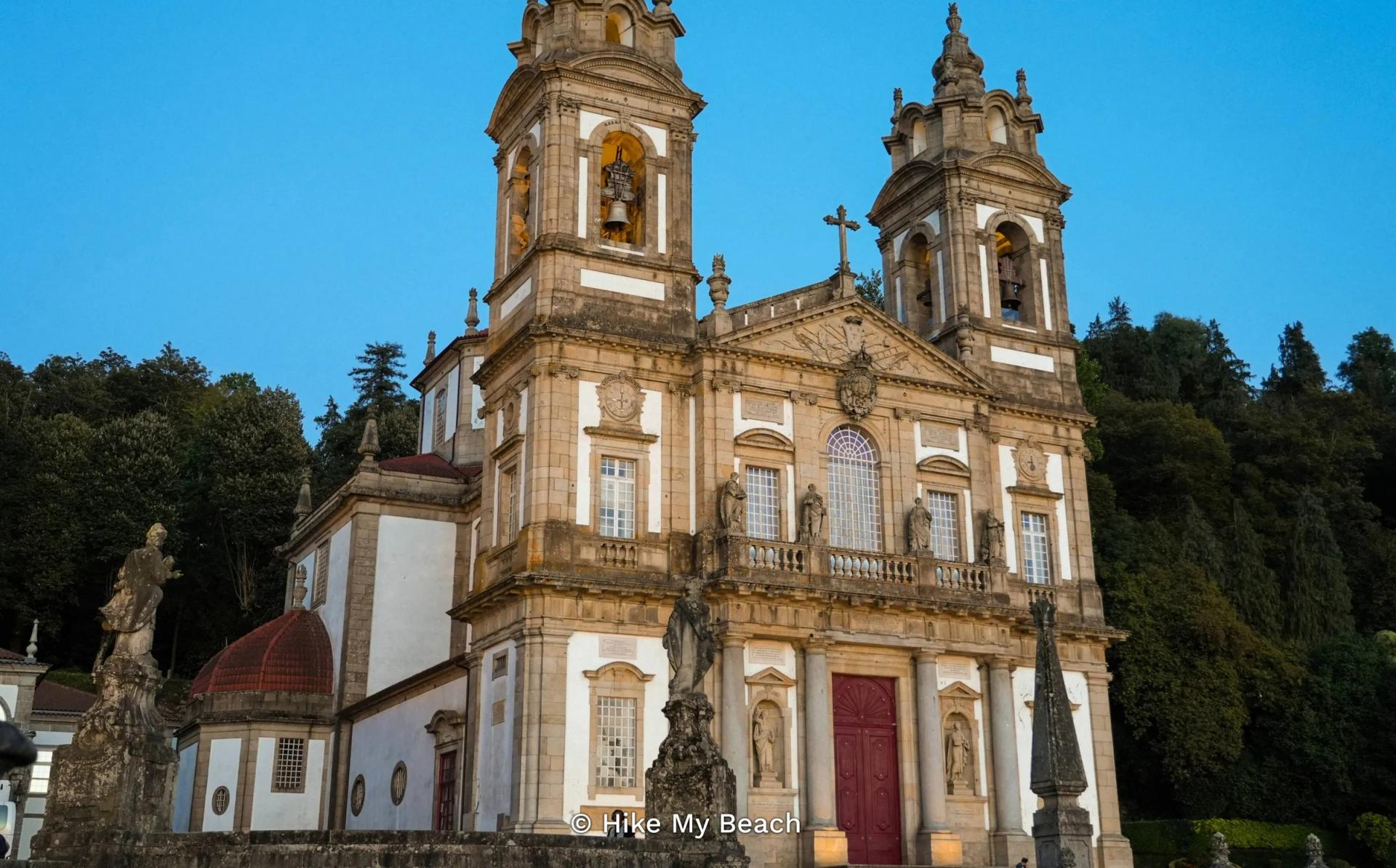
The first flight has fountains for the five senses, the next one honours faith, hope and love, and at the top a restrained neoclassical church (finished in 1811) replaces the decoration below. You can climb the steps or take the water-powered funicular, which dates from the 19th century.
We also planned to visit Braga, but had to skip it, unfortunately. But definitely visit it if you have a few spare hours. The city has more than 30 churches and is often called the Portuguese Rome.
We headed directly to Porto and spent a night in a hostel there.
Day 2: Porto and Capela do Senhor da Pedra
We spent the full day in Porto and stopped at a chapel on the shoreline before driving to Aveiro for the night.
Porto
Porto sits on both banks of the Douro River, so we saw it from each side. Our stops ran from sunrise on the south bank to the station tiles in the old center.
Of course, this city deserves more than a stop on a road trip, and you can find numerous exciting things to do in Porto, including climbing Torre dos Clérigos and visiting Mercado do Bolhão.
Miradouro da Serra do Pilar
We went here for sunrise. The viewpoint is at the former Serra do Pilar monastery in Vila Nova de Gaia, on an outcrop above the Dom Luís I bridge, and it looks over Porto and the river.
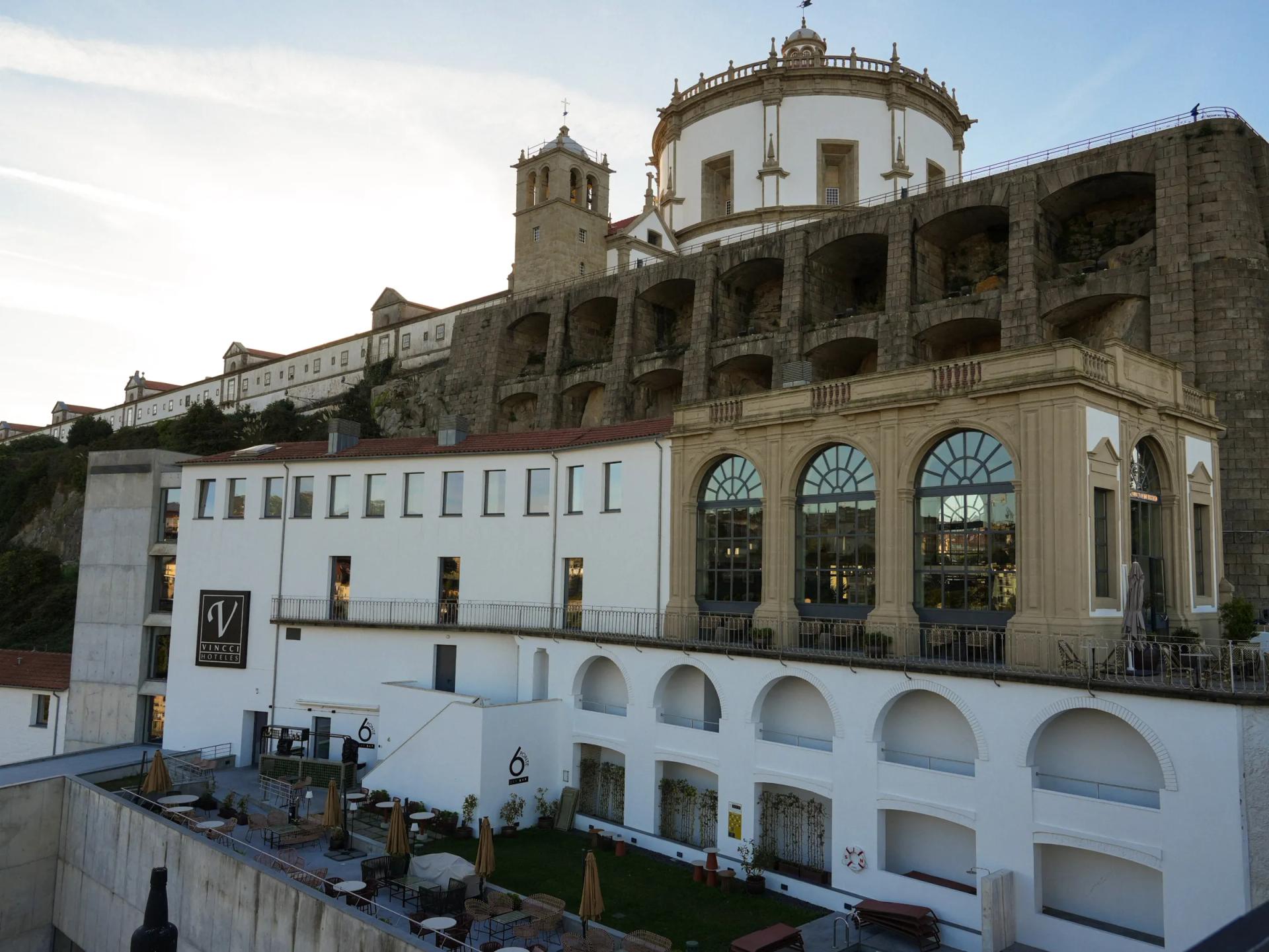
The monastery is part of the UNESCO listing for Porto’s historic center, which dates from 1996.
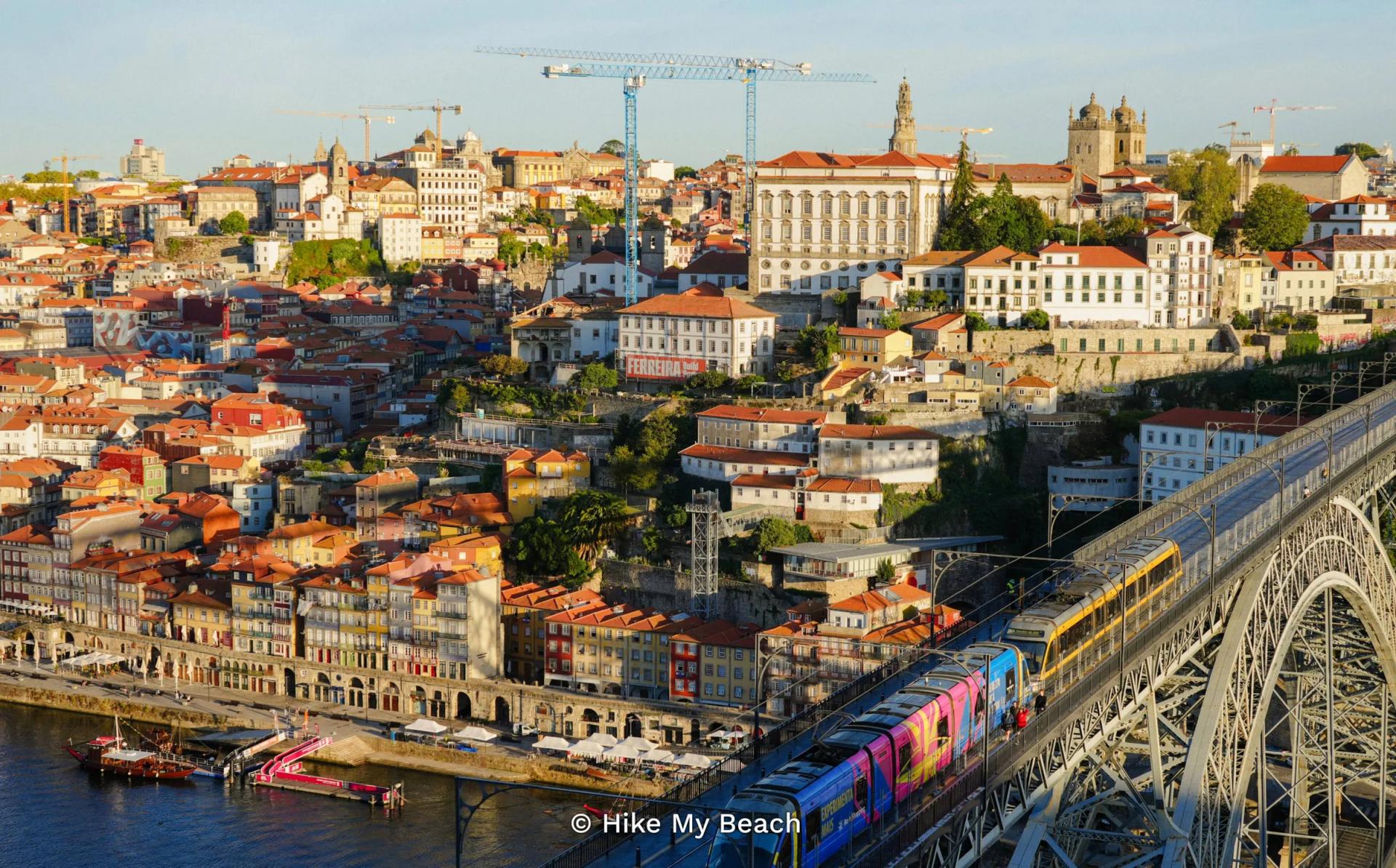
Dom Luís I Bridge
Théophile Seyrig designed the bridge, and the upper deck opened on 31 October 1886, with the lower deck a year later.
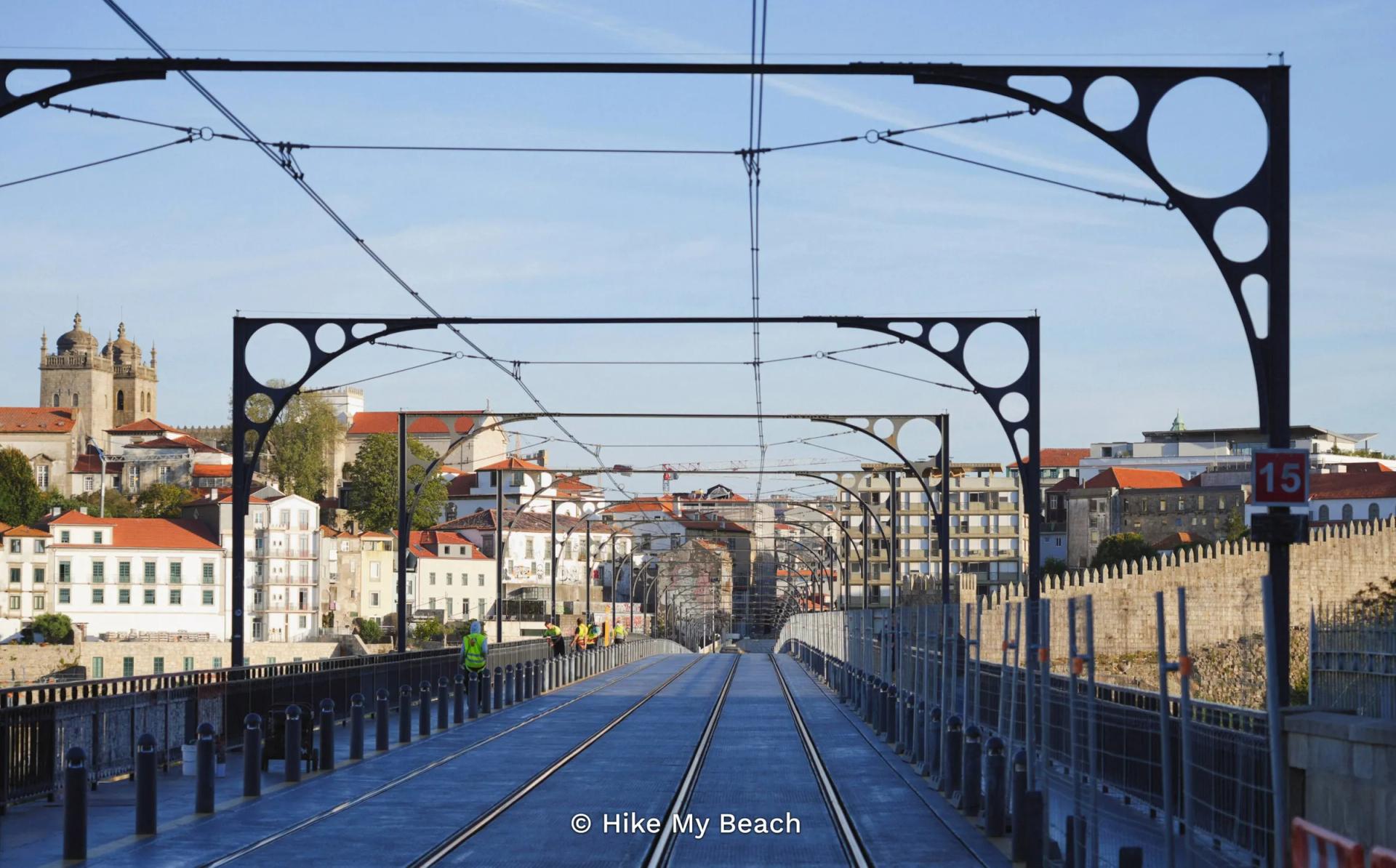
The upper deck is 395 m long, and the lower deck is 172 m long. Both have walkways, so you can cross on foot. The upper deck also carries Line D of the Porto Metro.
Rabelos and port wine on the Gaia side
Rabelos are flat-bottomed wooden cargo boats found only on the Douro. For centuries they carried port wine from the Douro Valley down to Porto for export. Their shallow draught suited the upper river before the railway arrived and before dams and locks were built from 1968.
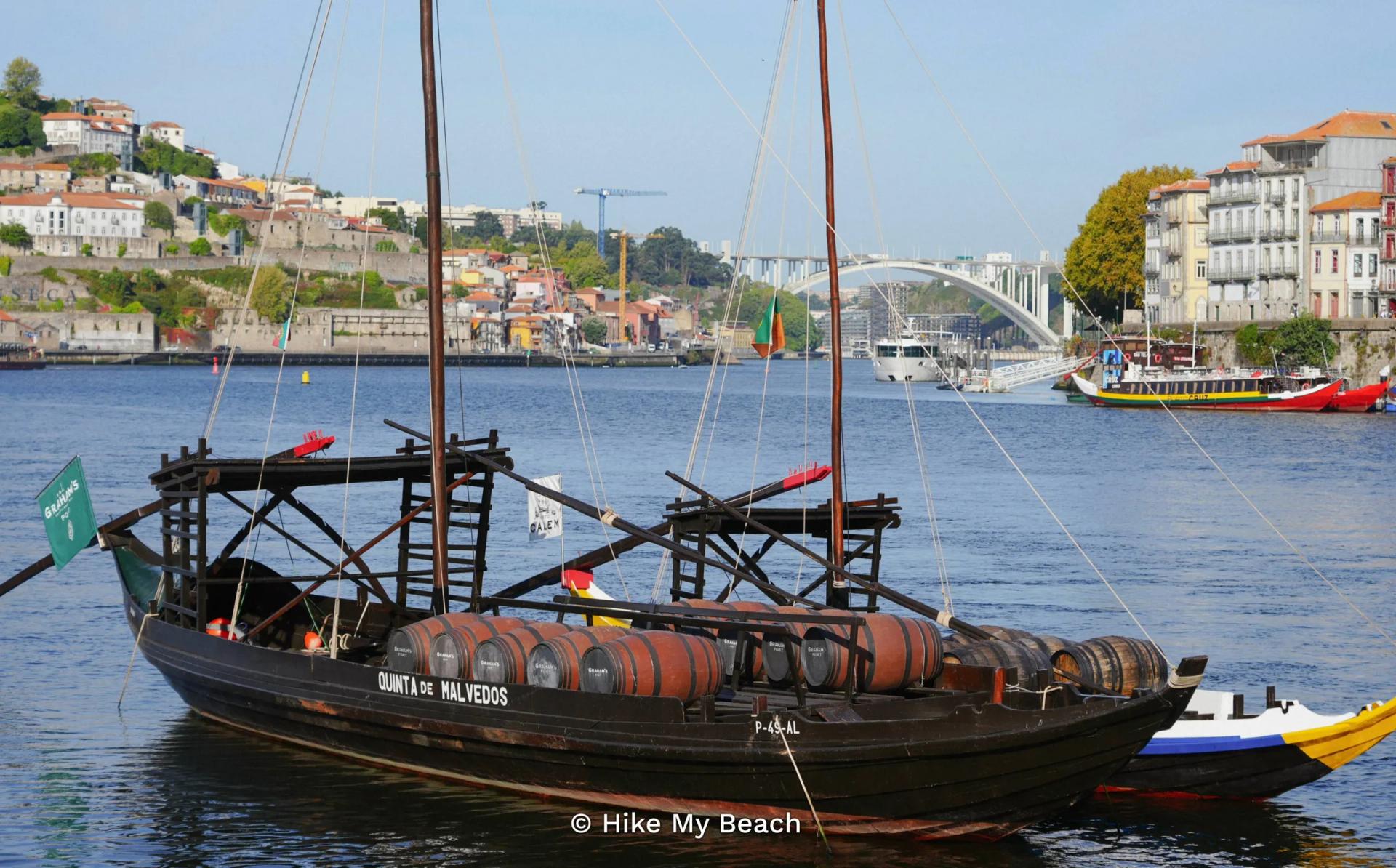
They no longer work commercially, but some still belong to port wine companies, and you can see them along the river in Porto and Gaia.
Ribeira
Ribeira is the old harbor district on the Porto bank of the river.
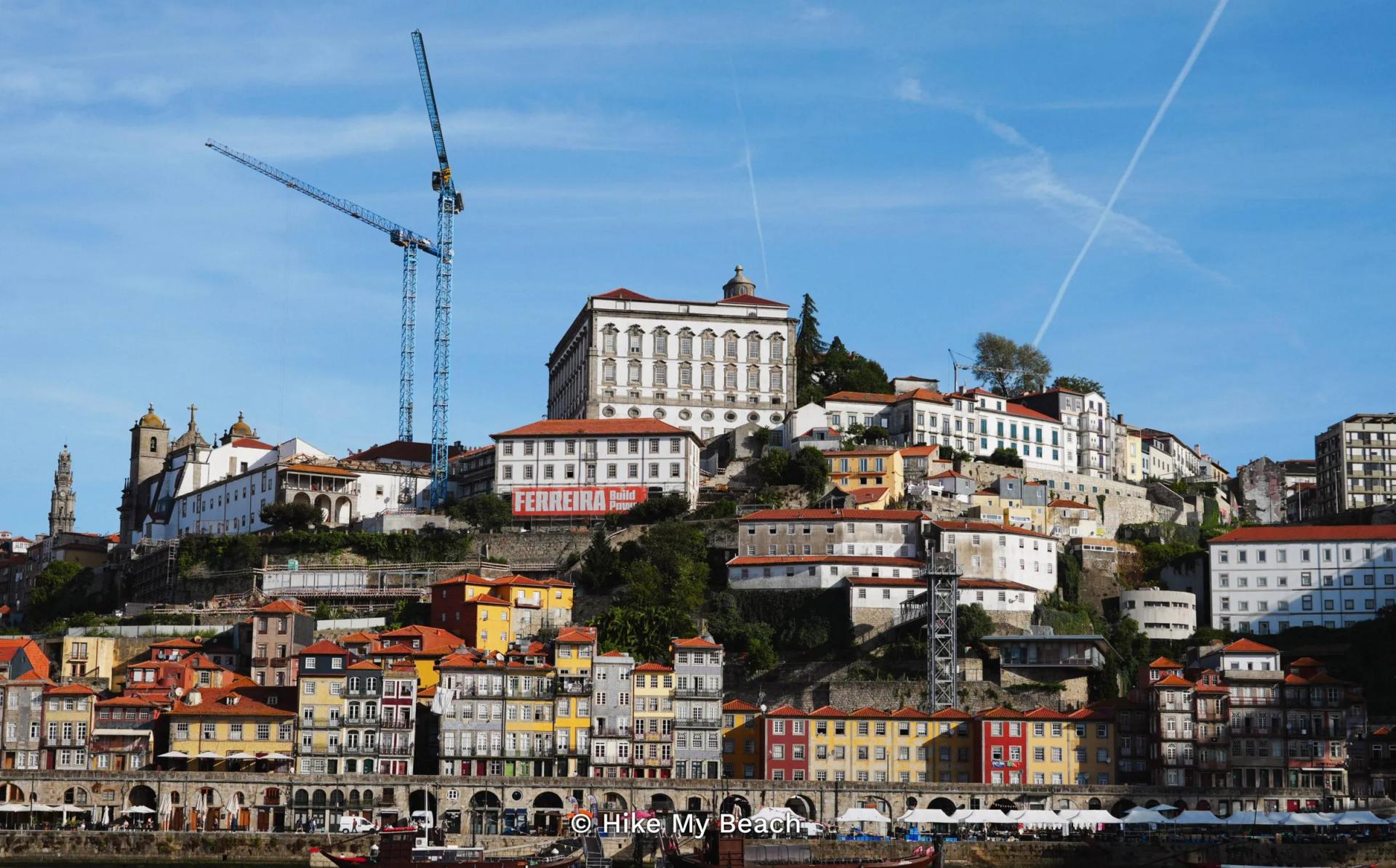
It developed outside the original medieval town and was later enclosed by the Fernandine walls, which were completed in 1376. The historic center still keeps its medieval street plan, which is part of why UNESCO listed it in 1996.
Climbing the Arrábida bridge
The Porto Bridge Climb opened on 24 June 2016 and lets visitors walk up and over the bridge arch. We climbed about 262 steps and were rewarded with gorgeous views.
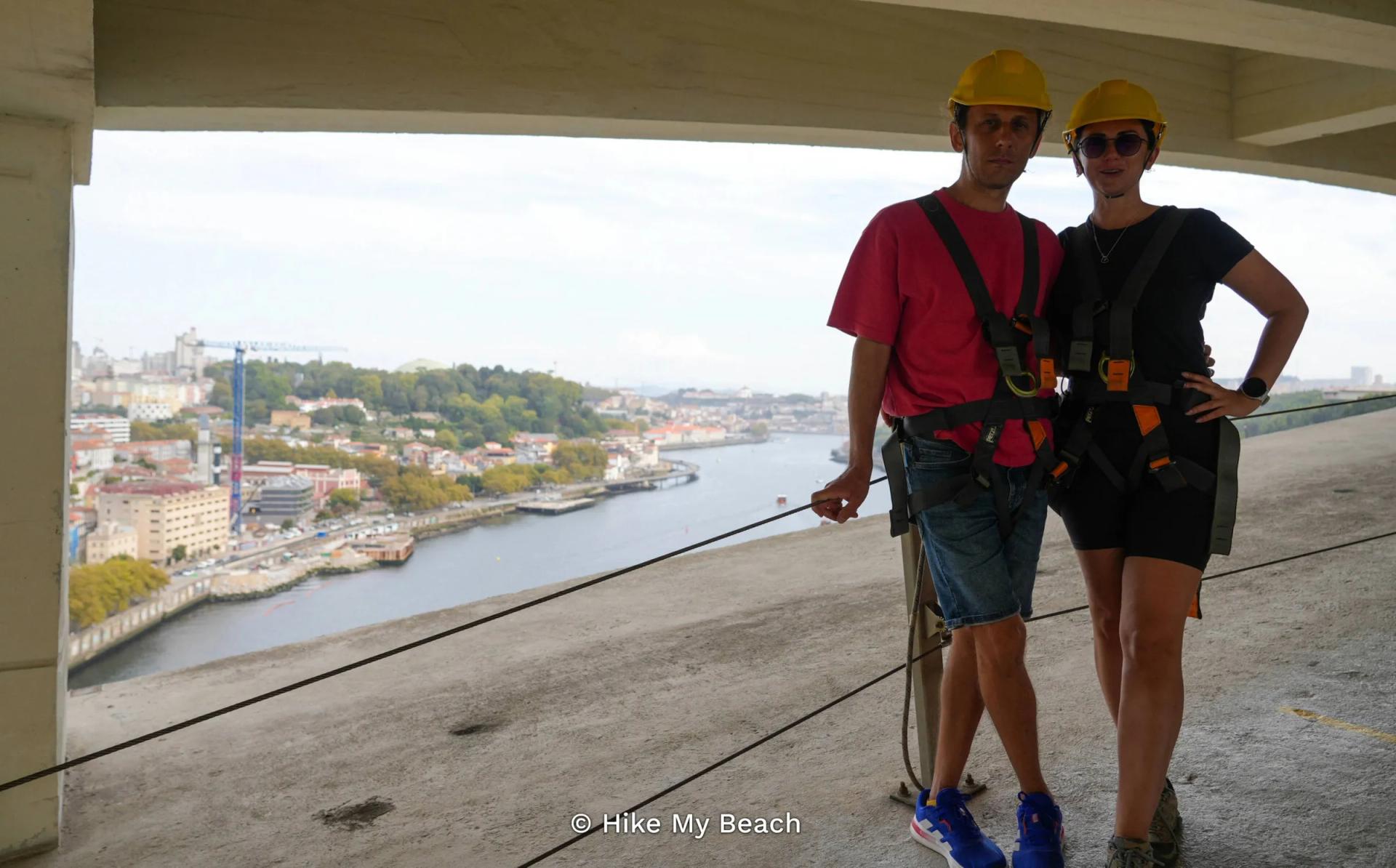
Edgar Cardoso designed the Arrábida Bridge, and it opened on 22 June 1963. Its 270 m main span was the longest of any concrete arch bridge in the world when it was finished, and the deck is 70 m above the Douro.
Sé do Porto
Work on the cathedral began around 1110, after a chapel was founded in 1108. Construction of the current building began in the second half of the 12th century and continued into the 16th century.
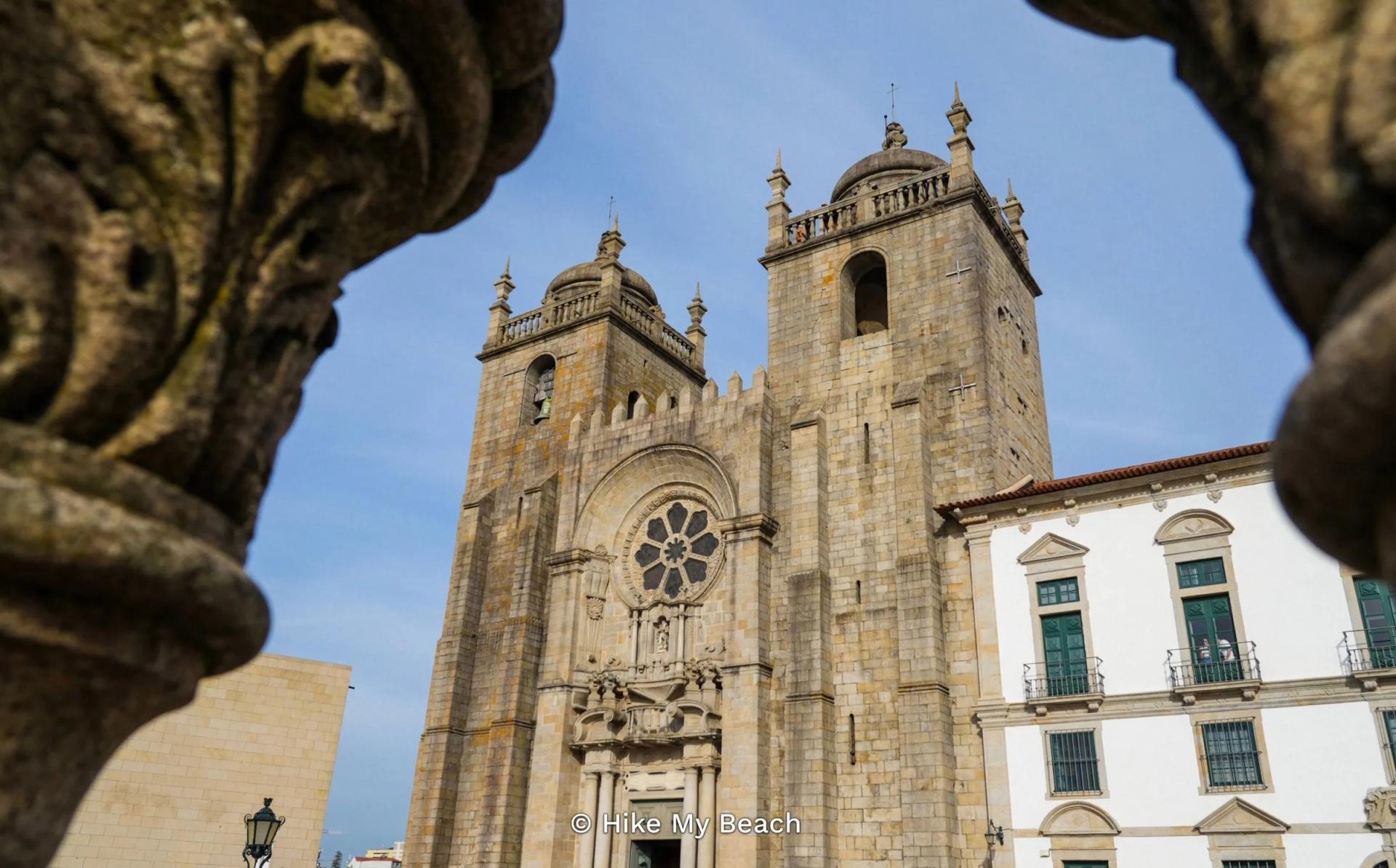
Baroque additions were completed in 1737, so the church mixes Romanesque, Gothic, and Baroque styles.
São Bento station
The station opened in 1916, and José Marques da Silva designed it.
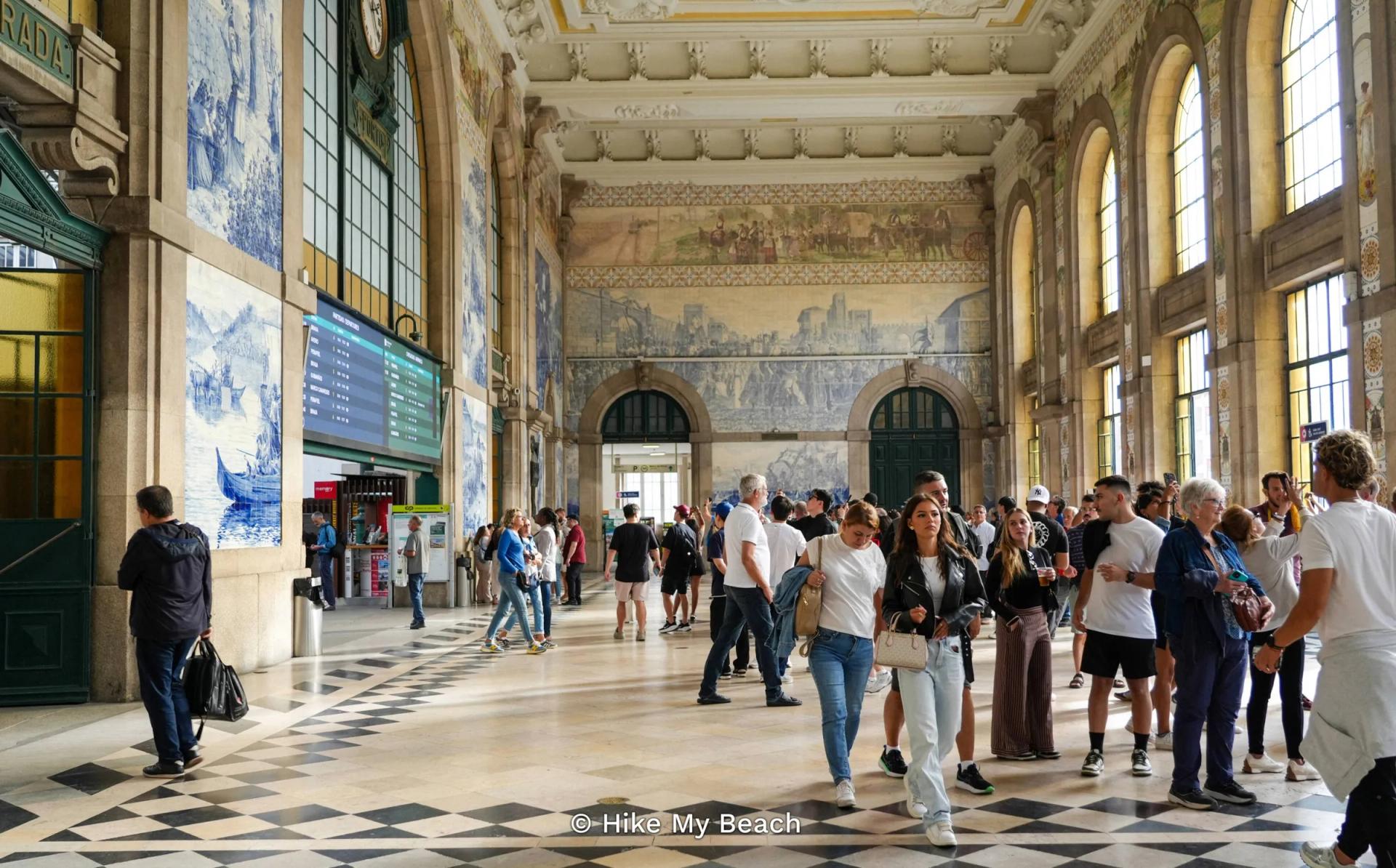
The hall holds about 20,000 azulejo tiles by Jorge Colaço. They depict scenes from Portuguese history, including the Battle of Valdevez, Egas Moniz, and the conquest of Ceuta, as well as rural scenes and a frieze on transport. The station stands on the site of a Benedictine convent that King Manuel I ordered built in 1518. A fire damaged it in 1783, and it was demolished in 1892.
Capela do Senhor da Pedra
After Porto, we stopped at Capela do Senhor da Pedra, a small chapel on the shoreline.
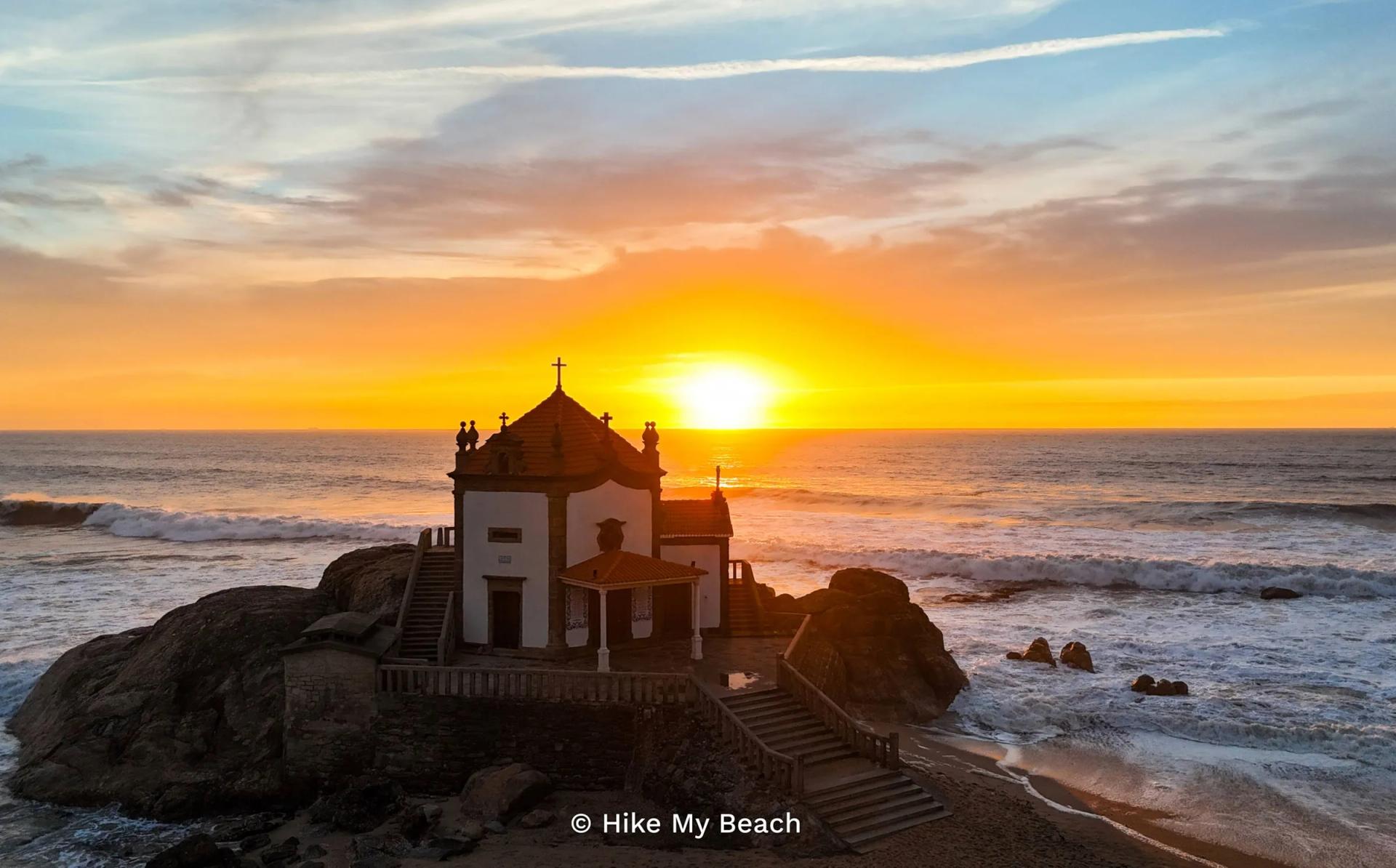
The chapel stands on a rock on Miramar Beach in Vila Nova de Gaia, about 20 minutes by car from central Porto. Legend says the sea brought the image of Christ to the rock, and the annual pilgrimage runs from Holy Trinity Sunday through the following Tuesday. We arrived at sunset and did not regret it, so time your visit for the end of the day if you can.
We slept in Aveiro and started the morning there.
Day 3: Aveiro, Coimbra and Batalha
This is a long driving day, but each stop is short and different.
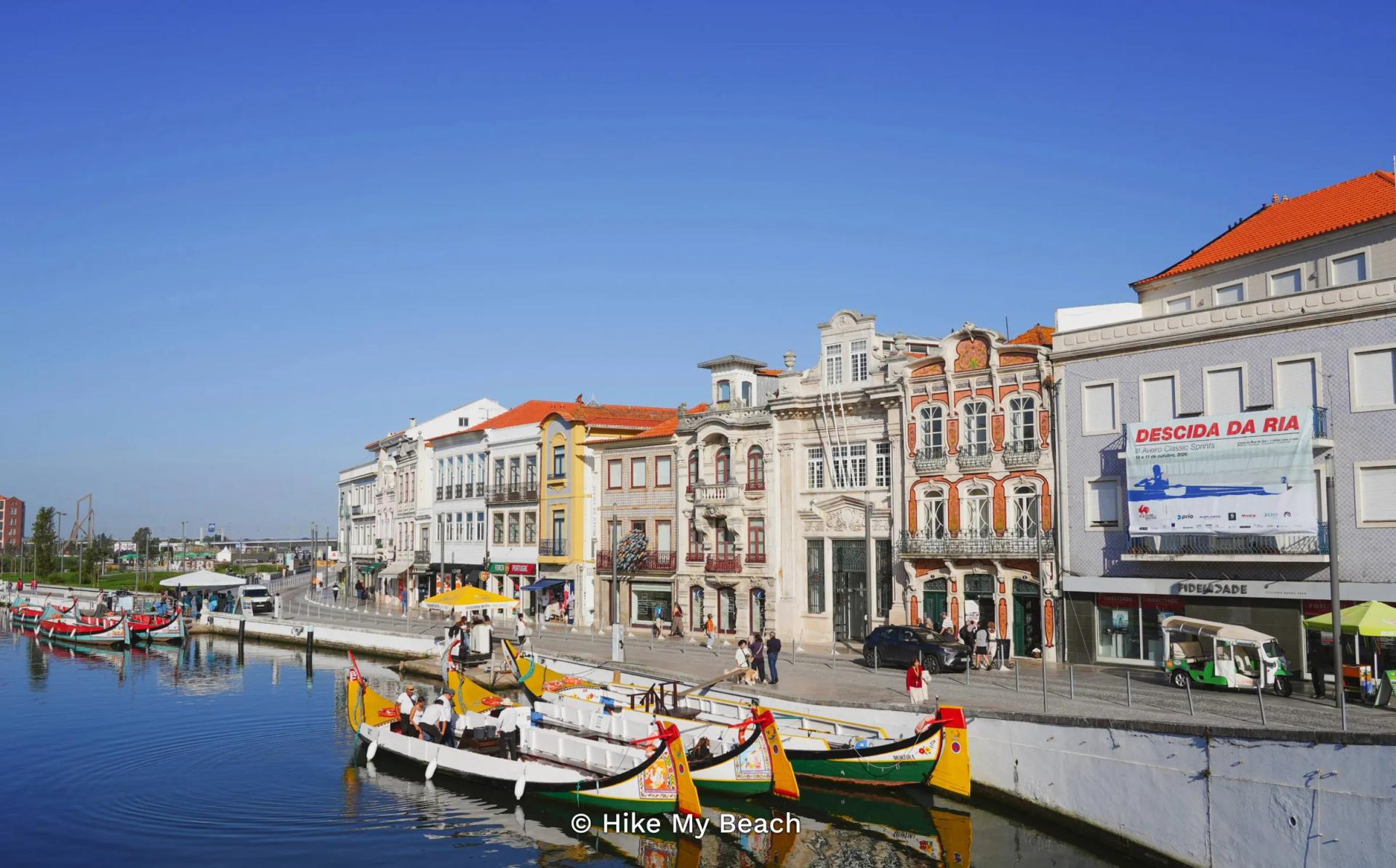
Aveiro
People call Aveiro the Portuguese Venice, though we disagree. The city has a canal, a handful of small bridges and the moliceiros, brightly painted boats that once collected seaweed and now carry tourists.
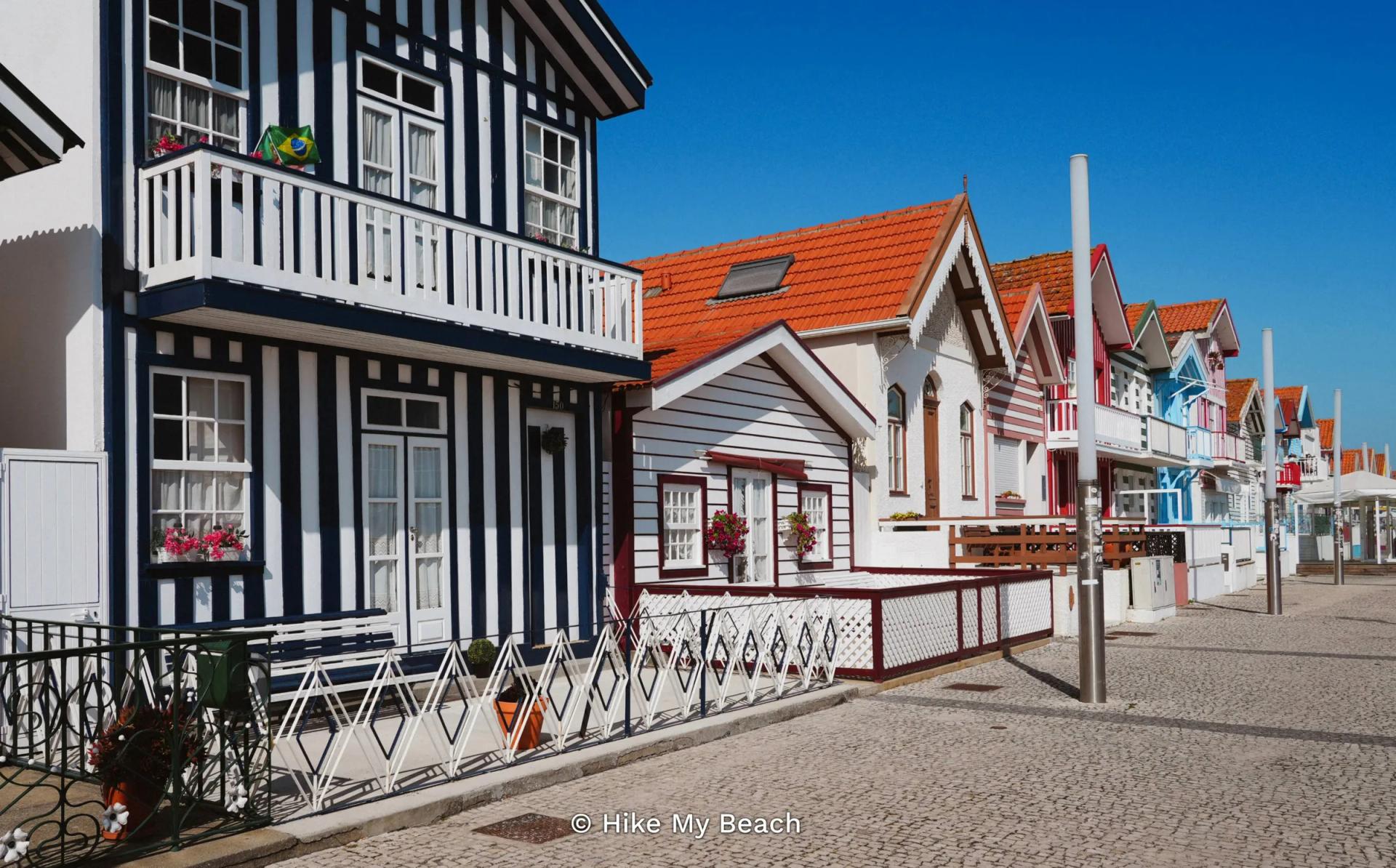
Near Gafanha da Encarnação, we saw the striped wooden palheiros, which started as fishermen's sheds in the 19th century. The stripes helped fishermen spot their own shed in the fog, and today the houses are mostly summer holiday homes.
Coimbra
Coimbra governed the country before Lisbon did. The first six kings were born here between 1131 and 1255.
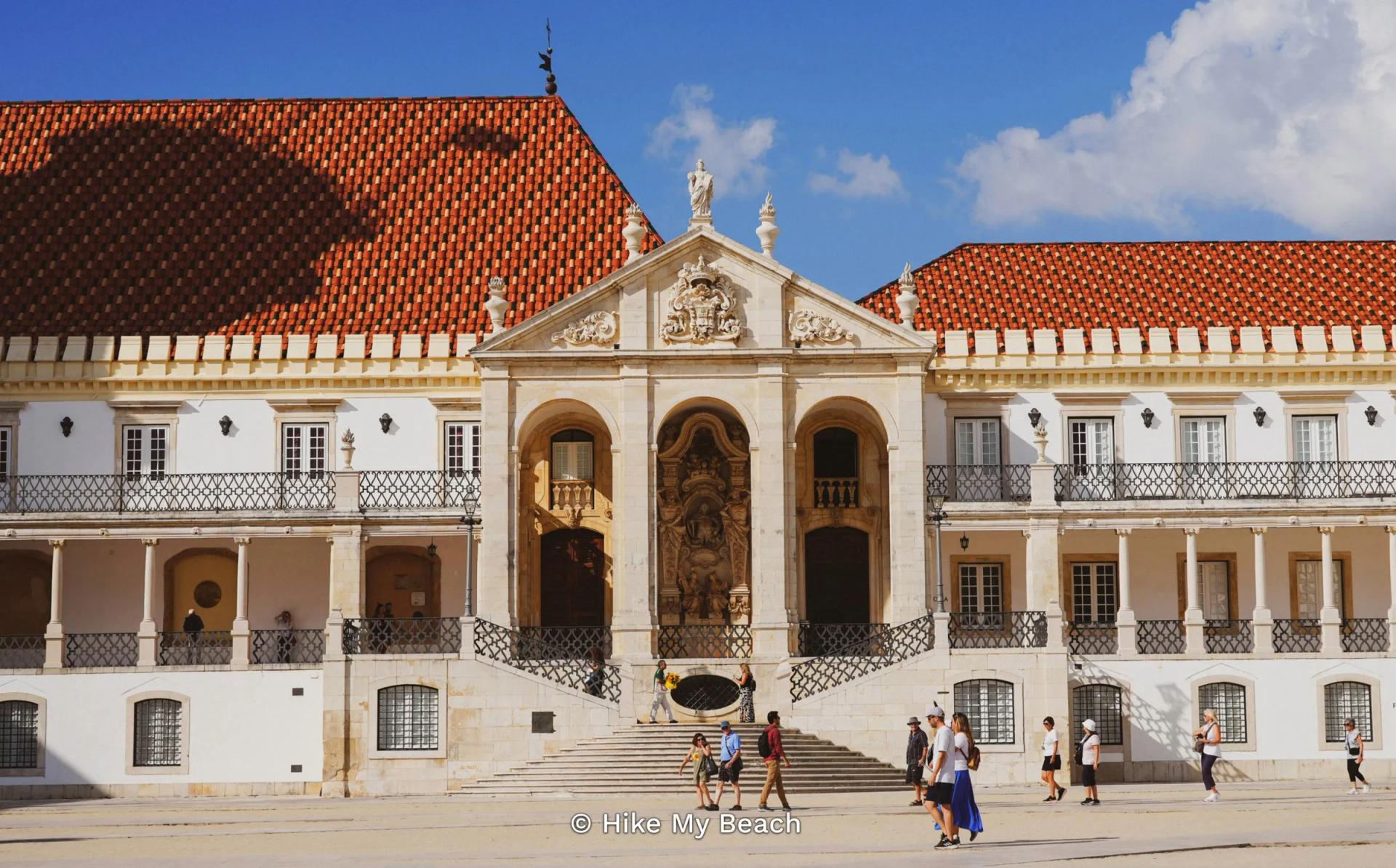
The university was founded in 1290 and has been in the city since 1537. Lisbon took the power, but Coimbra kept the brain of the country, and the student town still has black robes, fado guitars, and rituals that are several hundred years old.
Batalha Monastery
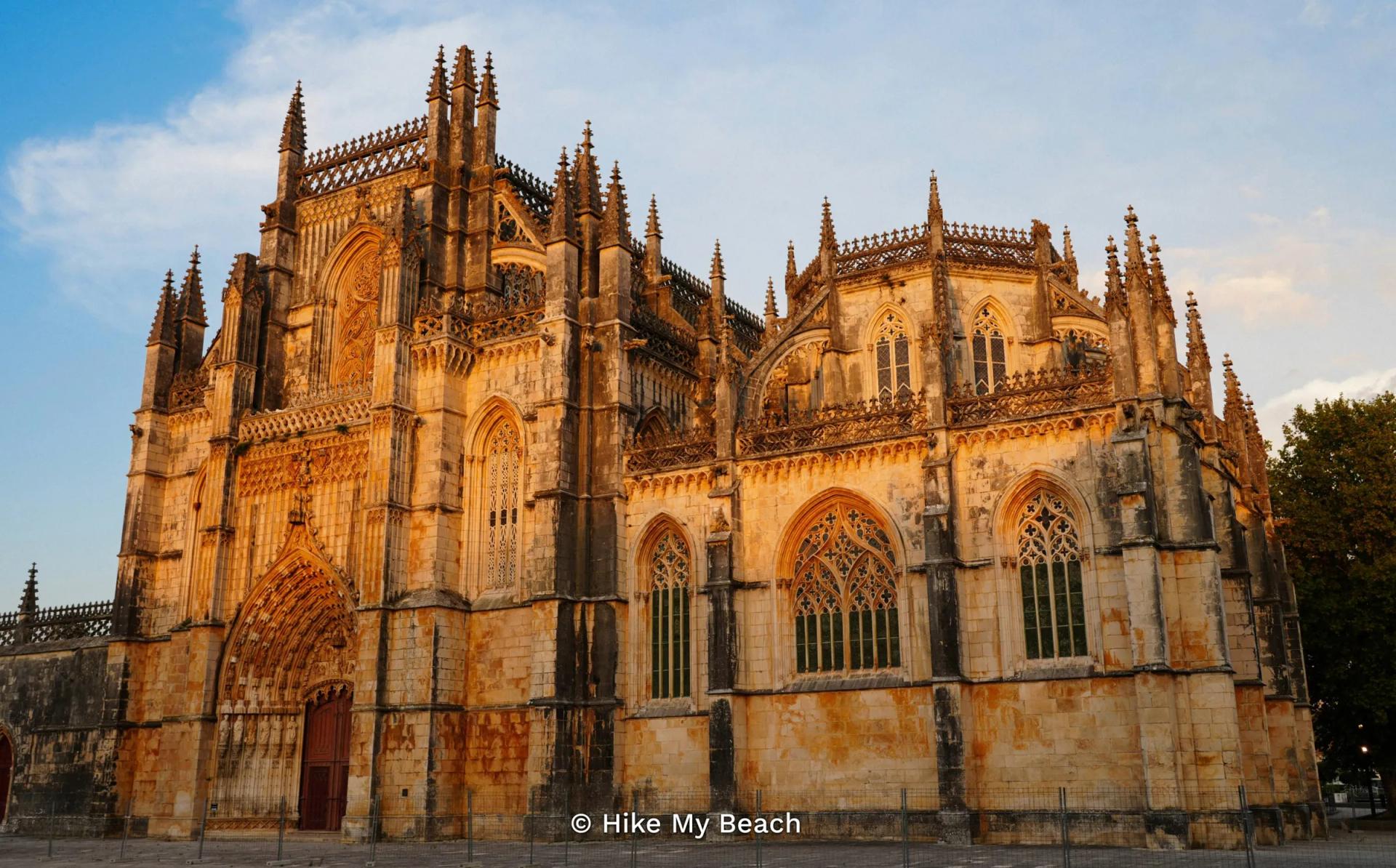
Batalha Monastery exists because King João I promised to build it if he won the Battle of Aljubarrota in 1385. Construction took about 150 years and seven royal reigns. We slept 20 minutes from Nazaré.
Day 4: Nazaré, Alcobaça and Peniche
The day links a big-wave town, a monastery and the fortress town of Peniche.
Nazaré
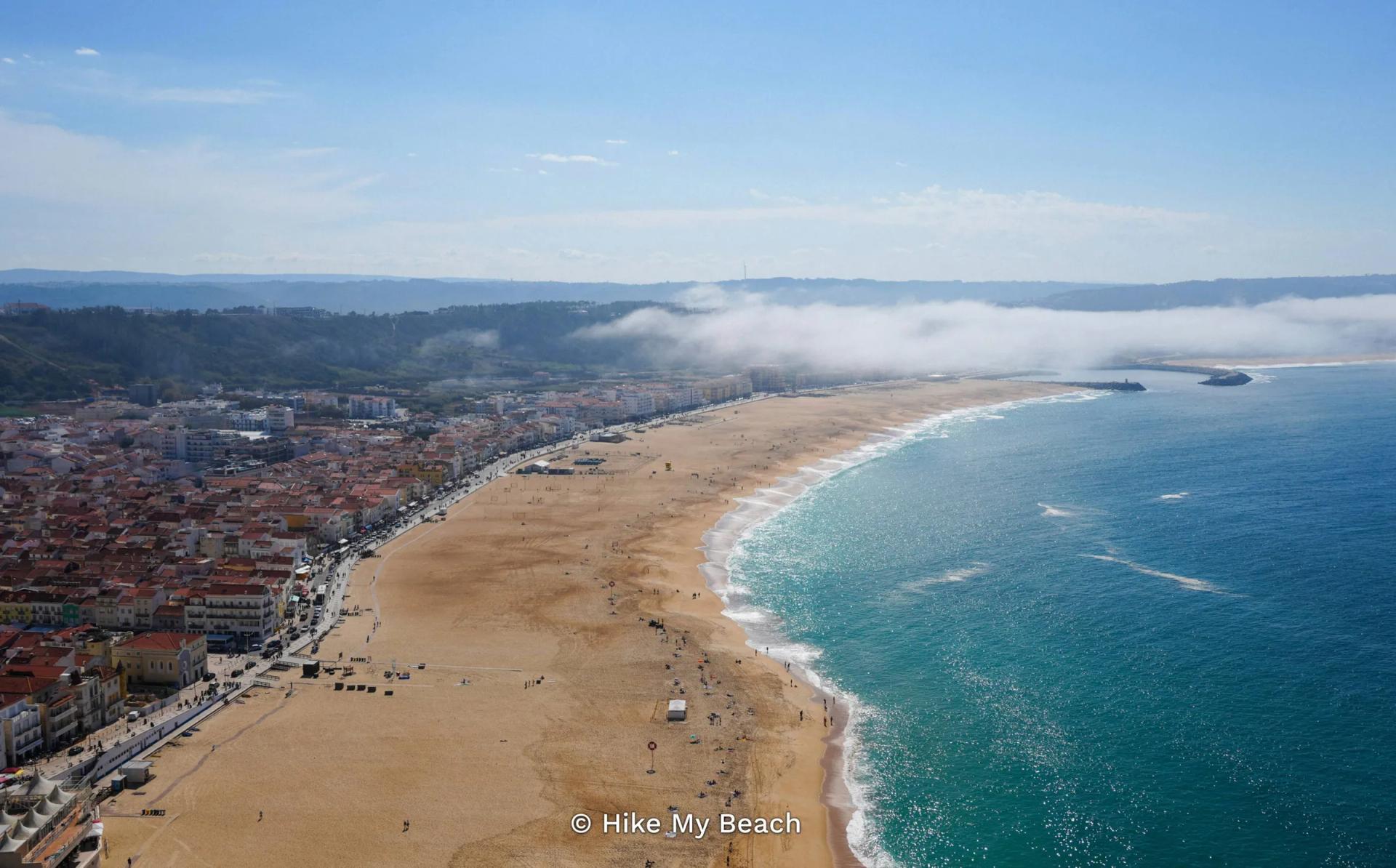
Nazaré is the town famous for some of the biggest surfable waves in the world. The largest swells mostly arrive in winter, so a visit in early October is more about the viewpoint and the town than the waves.
Praia do Norte and the fort
The fort and lighthouse above Praia do Norte are the classic viewpoint for the big waves. In early October, we were there for the view of the coast, not the surf.
Sítio
Sítio is the old clifftop quarter above the beach, with a view over the whole bay.
Monastery of Alcobaça
This monastery holds the most tragic love story in Portuguese history.
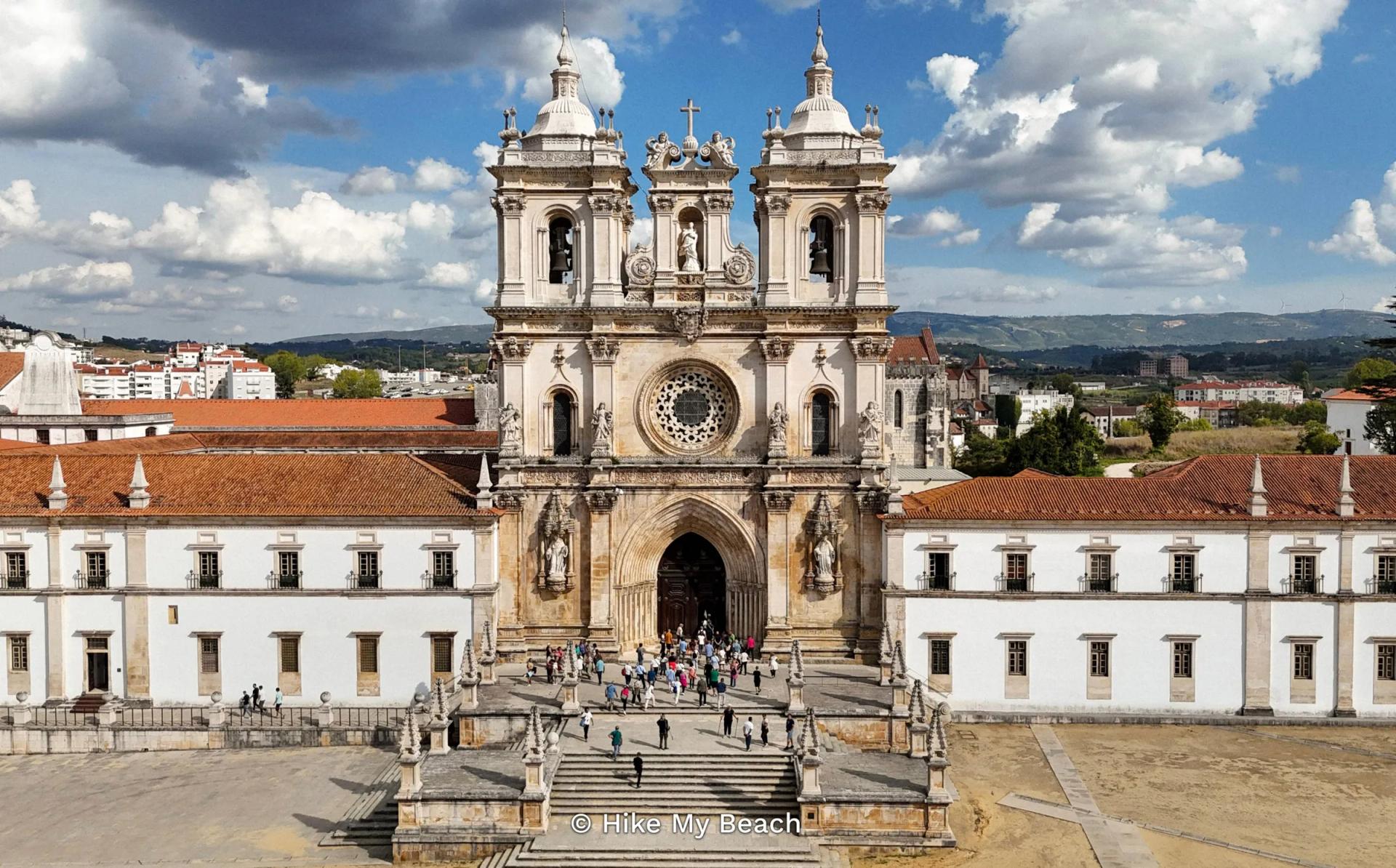
Prince Pedro loved Inês de Castro, who was killed in 1355 on his father's orders. When Pedro became king, legend says he crowned her queen after her death, and the two tombs stand foot to foot so they would see each other first on Judgment Day. The inscription reads "até ao fim do mundo", or "until the end of the world".
Peniche
Peniche is a surf town on a peninsula, and it has a second, darker story. We slept in Ericeira afterward.
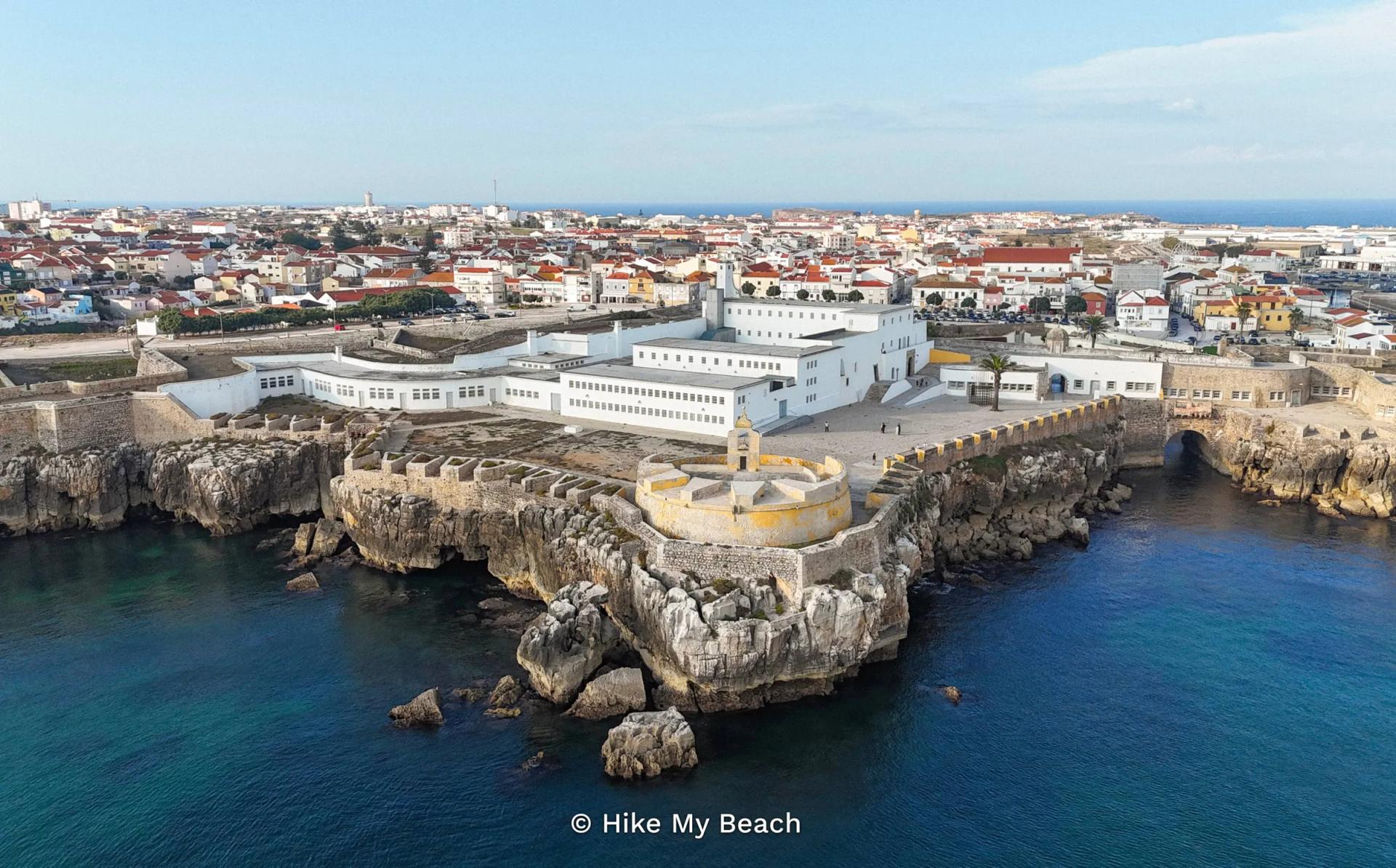
Peniche fortress
The fortress was a political prison under the Salazar dictatorship, where the regime sent people who disagreed with it. That regime kept the country poor until the 1970s, which pushed millions of Portuguese to emigrate.
Supertubos
Supertubos is ranked among the best waves on the planet.
Day 5: Ericeira and Cabo da Roca
We started in the surf town where we lived and drove to the western tip of Europe.
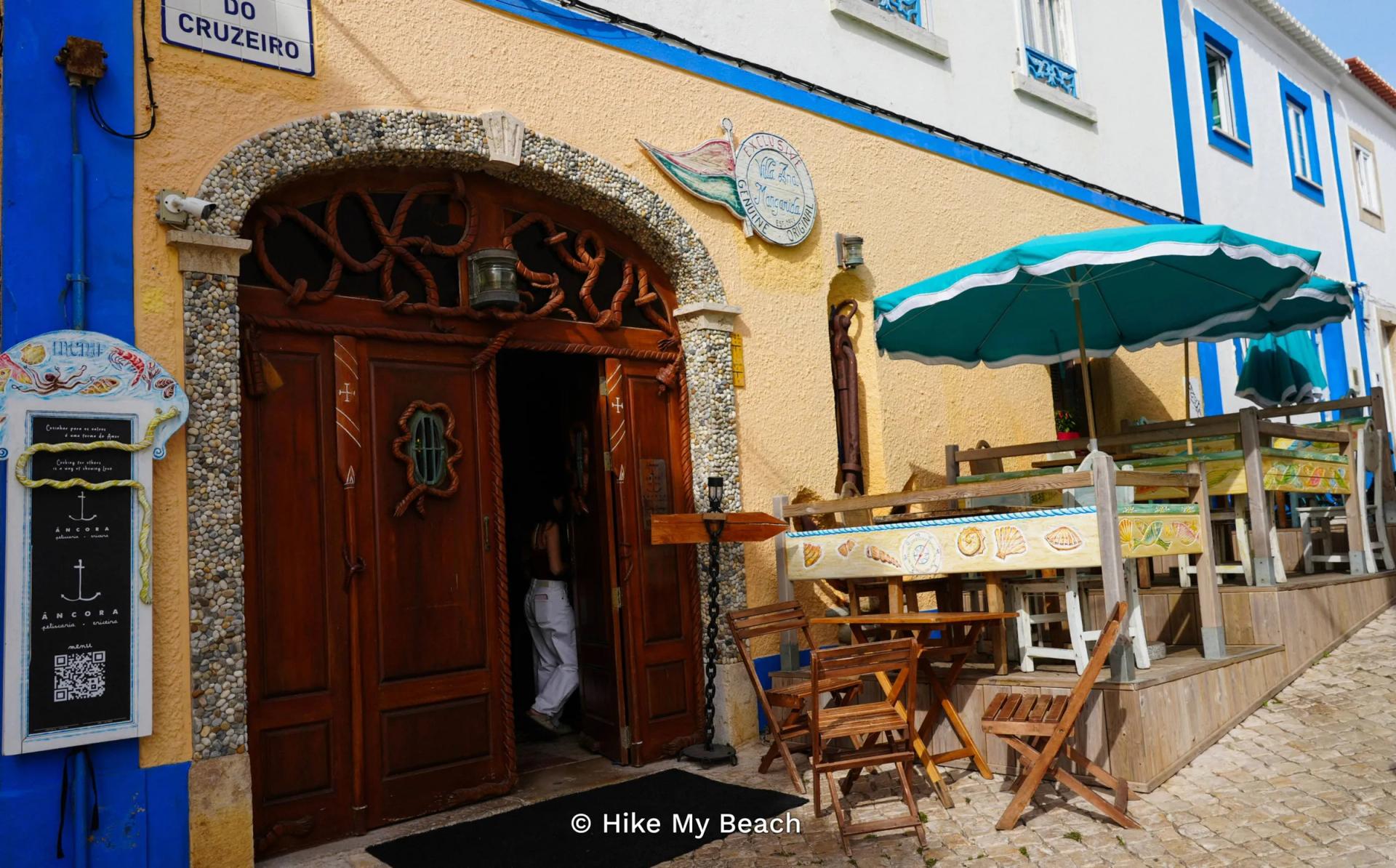
Ericeira
Ericeira is the surf town we know best, because we lived here for our first six months in Portugal. It is a World Surfing Reserve, and you can read our ultimate Ericeira guide to learn more about this charming old town.
Fishing port
Fishermen once lived here, and daily life in the town revolved around fishing. The port and a monument to the fishermen are still there.
Fradinhos egg cakes
Fradinhos are egg cakes that you find only in the part of Portugal around Mafra. Try one with coffee in the morning.
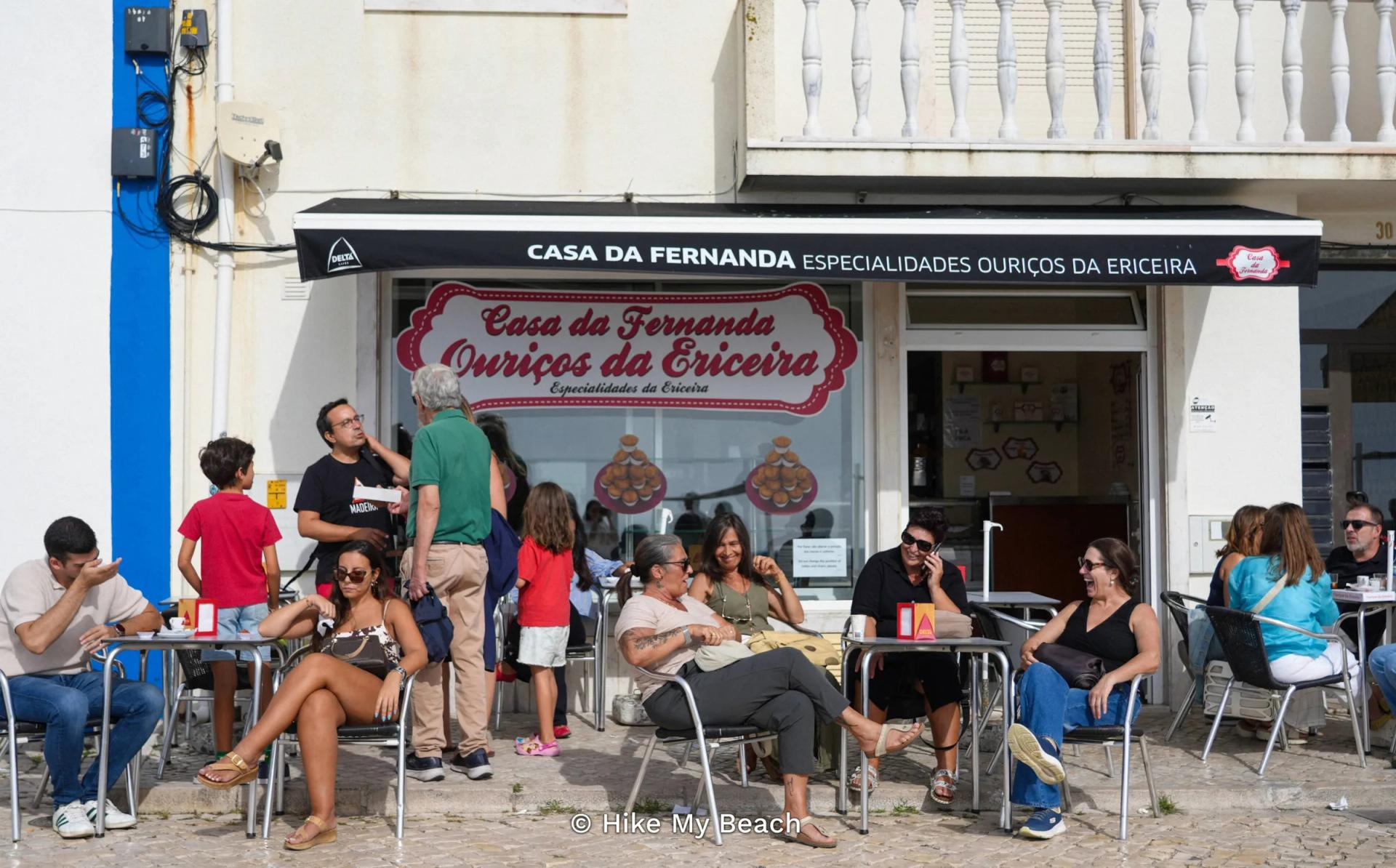
Octopus festival
Ericeira holds an octopus festival where restaurants serve octopus dishes they do not usually have. We went two years ago and tried sautéed octopus with potatoes, an octopus burger, an octopus sandwich, and octopus croquettes. It was very good, so we recommend it.
Cabo da Roca
Cabo da Roca is the westernmost point of continental Europe. A working lighthouse stands here, and a stone carries a line from Camões: "Aqui... onde a terra se acaba e o mar começa", or "Here, where the land ends and the sea begins." You can buy a certificate that confirms you stood at the edge of Europe. We didn't do that, and photos we made there were enough.
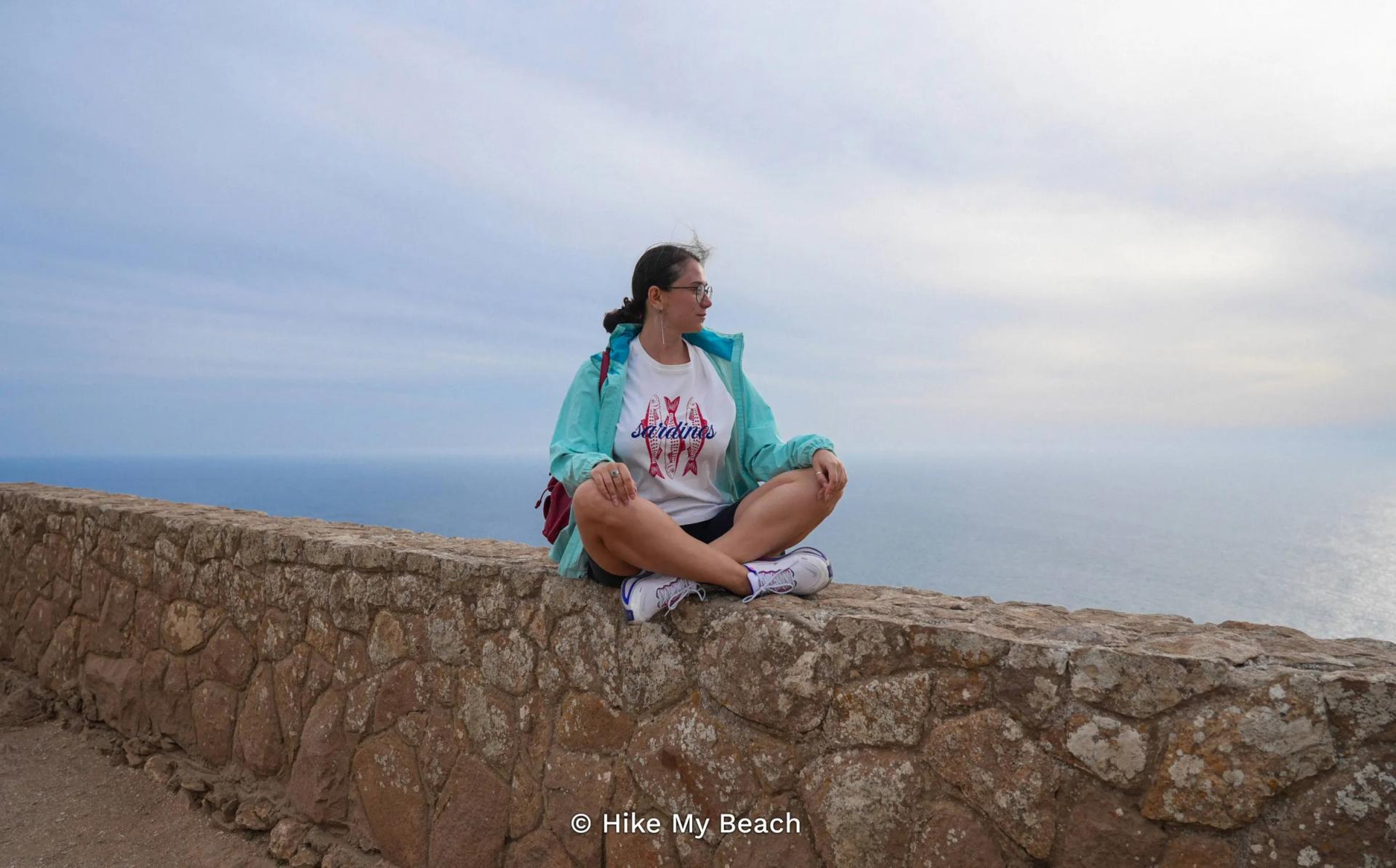
Praia da Ursa
A few minutes from Cabo da Roca is Praia da Ursa, one of the wildest beaches in Portugal.
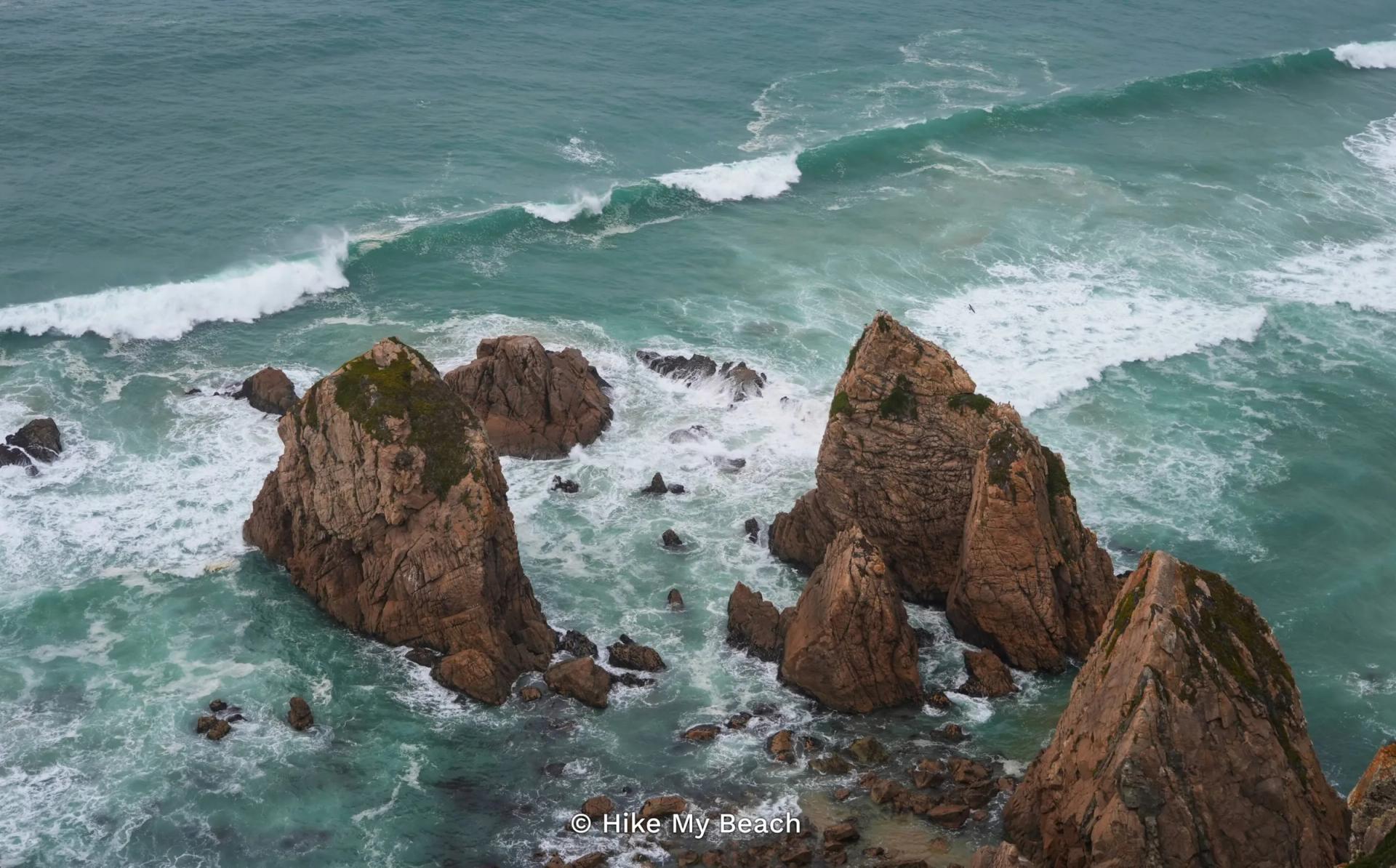
There is no direct road, only a steep, rocky descent of about 20 minutes that feels more like a mountain trail. At the bottom, two rock pillars rise from the ocean. The currents are strong, so few people swim, and our legs hurt for two days after the climb back up. Check the weather and the tide before you go down.
Sintra castles
We reached Sintra too late for the castles and had to skip them. That is why we suggest an earlier start or an extra day, and we spent the night in Lisbon.
Day 6: Lisbon
Lisbon gets one day on this route, which is enough for the highlights but not for the full city. The city works best on foot. For a one-week Portugal adventure, pick the districts below and leave the rest for another trip.
Praça do Comércio and Baixa
Start at Praça do Comércio, where the Paço da Ribeira palace once stood. On 1 November 1755, an earthquake, a tsunami, and fires destroyed it, together with the royal library and much of the city.
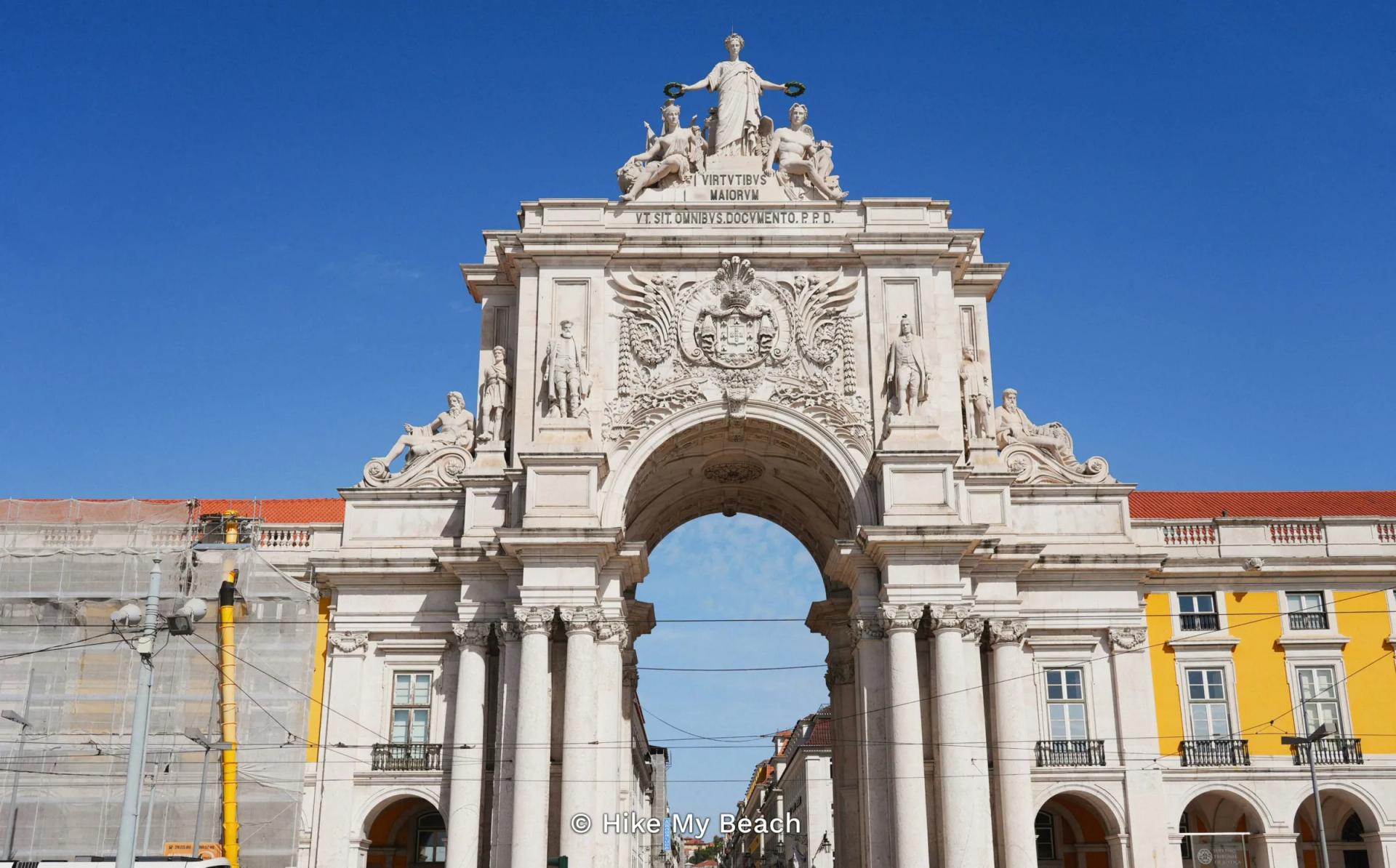
The Marquis of Pombal rebuilt the center with straight streets and a timber frame called the gaiola pombalina, designed to absorb tremors. Today's Baixa district reflects that plan.
Alfama
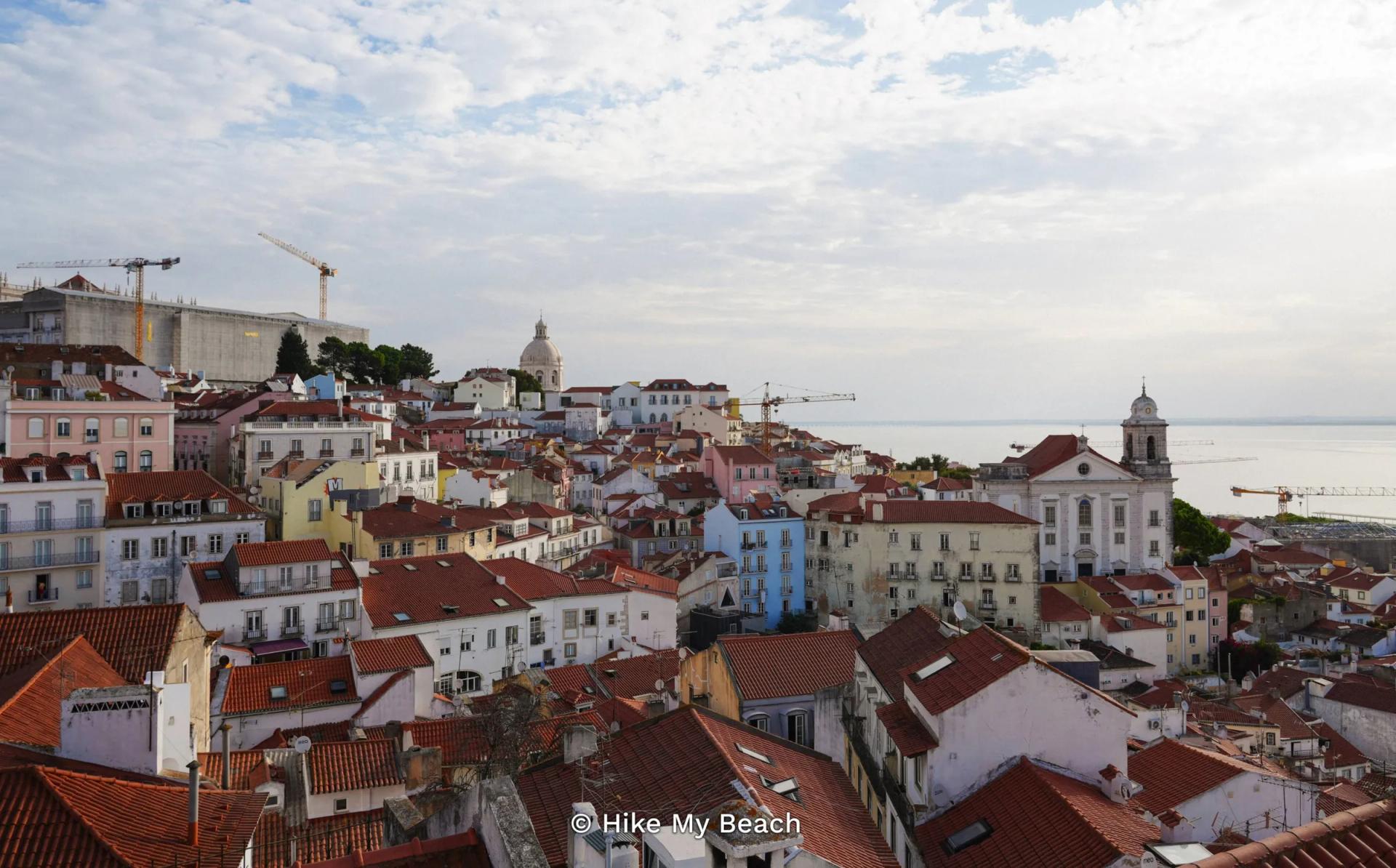
Alfama is a former Moorish quarter built on firmer rock, so it survived the quake. Two places are worth your time: Castelo de São Jorge on the highest hill and the Miradouro das Portas do Sol viewpoint, a few steps from it.
Belém
If you still have energy, go to Belém. The Jerónimos Monastery was founded in 1501 and showcases the Manueline style, with ropes and sea motifs carved in stone. Vasco da Gama's tomb is inside.
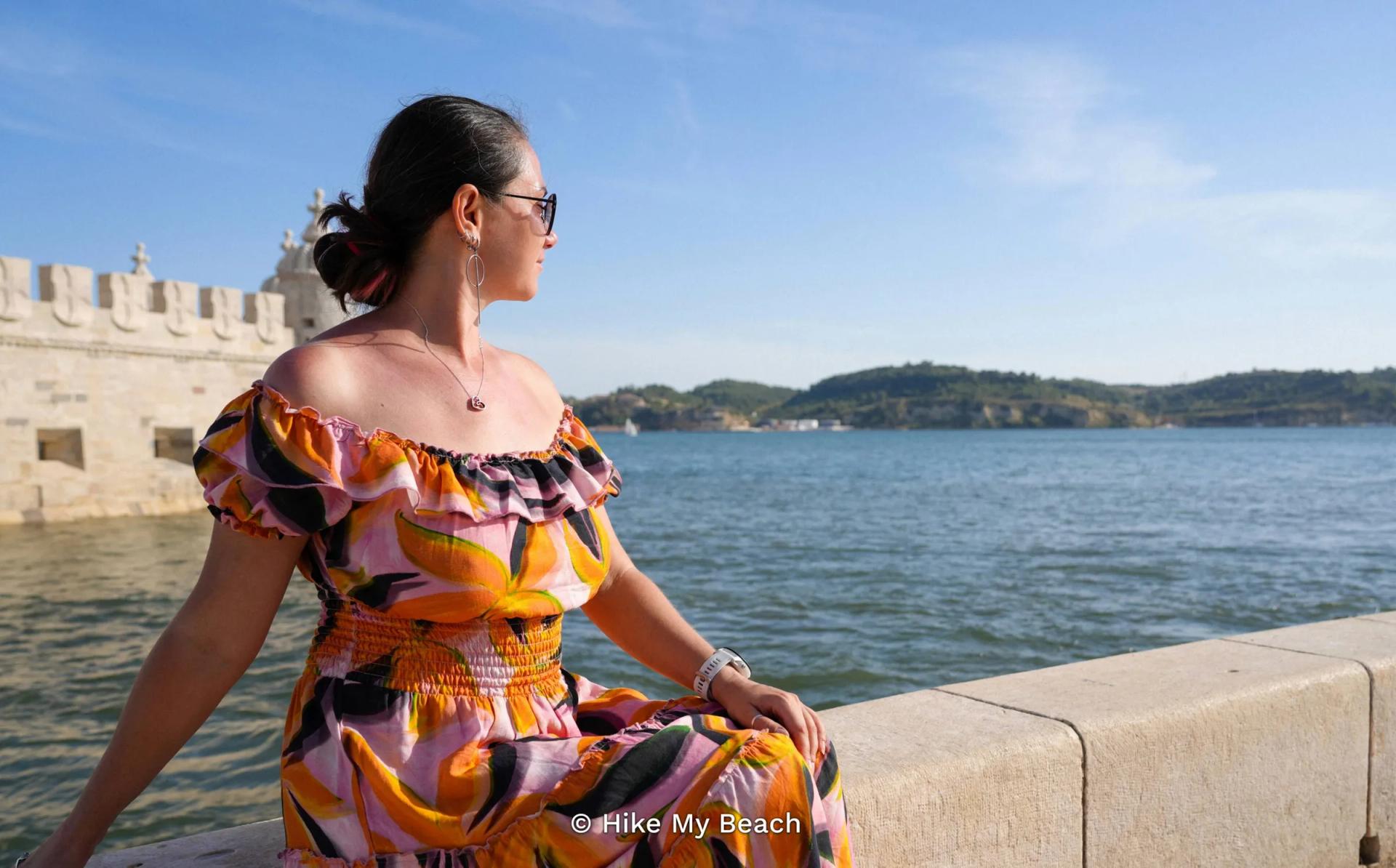
A few hundred meters away, the Torre de Belém dates from 1514 to 1519, and it has always stood on a small island near the shore, so the legend that it moved after the earthquake is wrong. Pastéis de Belém has very long queues, and honestly, the custard tarts at other bakeries are just as good.
Day 7: Sagres and Cabo de São Vicente
The last day is a long drive south to the corner of Europe where the Romans believed the world ended.
Sagres
Sagres was the end of the known world for the Romans, who called the cape sacred and believed the sun sank into the ocean here. It is a long drive from Lisbon, so start early and plan your stops. The most scenic option runs along the ocean shore.
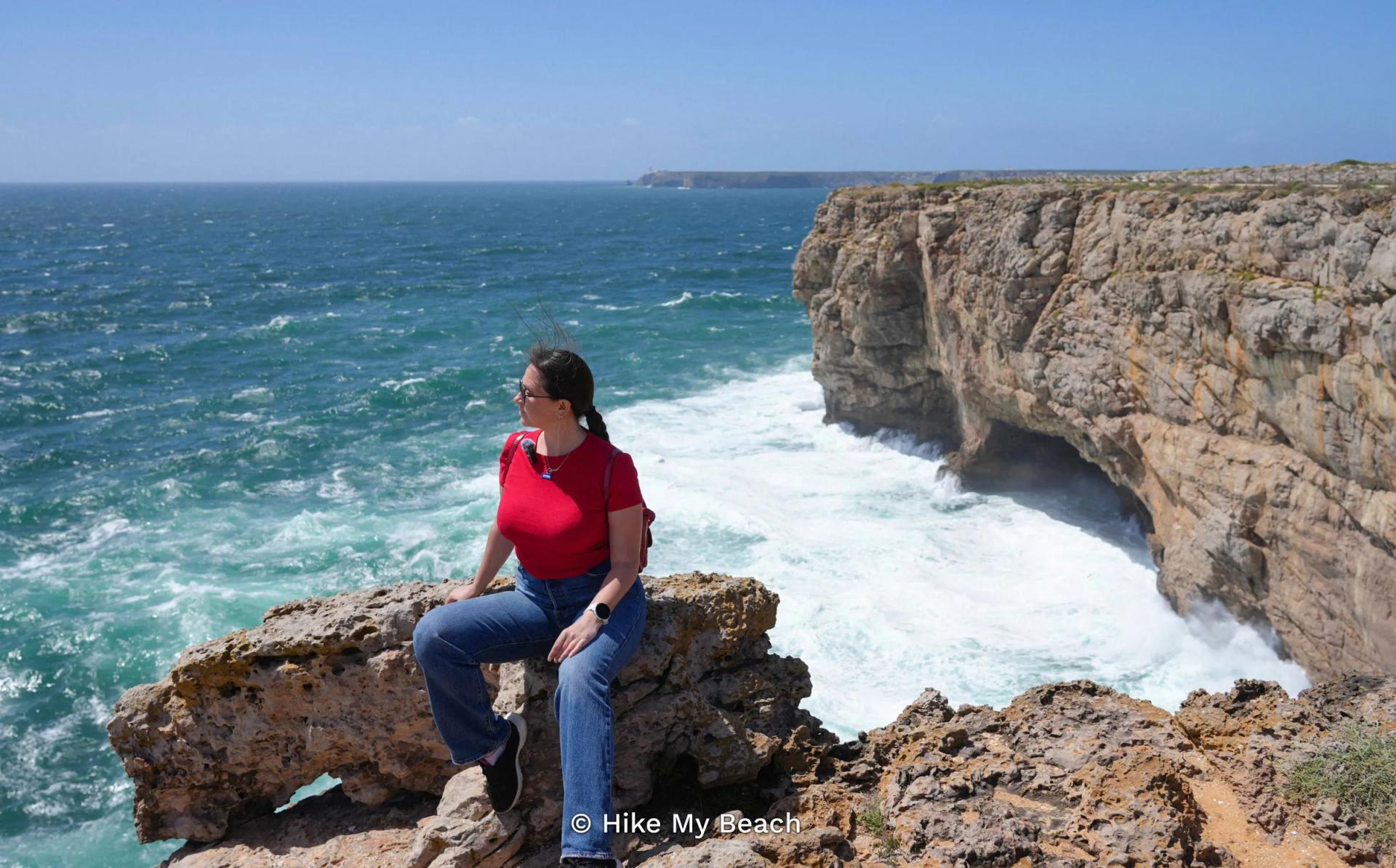
Sagres fortress
Prince Henry the Navigator built a fortress here around 1443. Inside lies a huge stone wind compass with 32 directions, and historians still argue whether it was a sundial or a navigation tool.
Cabo de São Vicente lighthouse
The lighthouse stands at the cape itself, where we ended the trip. The cape is named after Saint Vincent, whose relics, according to legend, arrived by sea and then sailed to Lisbon, guarded by two ravens that still appear on the city's coat of arms. Cliffs and strong winds are common here, so keep a safe distance from the edge.
If you have time, add Lagos and Albufeira on the way. Read our Algarve travel guide for more helpful information on beaches and trails.
Where to stay on a Portugal road trip
We booked hostels with private rooms for two, which kept costs low and gave us a base in each town. Some rooms came with a kitchenette and a bottle of wine as a welcome gift, and others had a private bathroom, so we didn’t have to share.
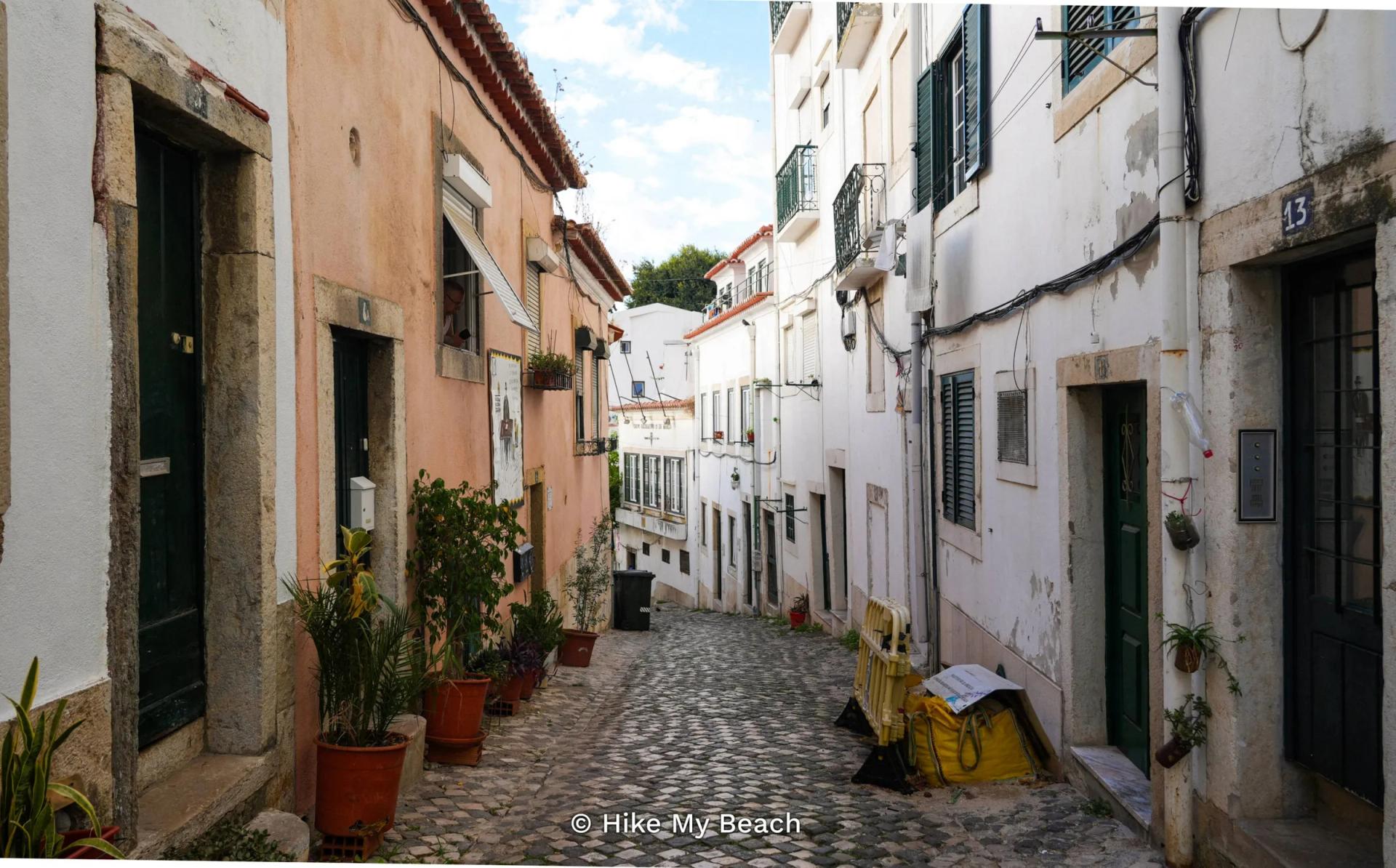
The table lists the places we booked, in route order, with the details we can confirm.
Property | Town | Bathroom | Distance from center | Price per night |
Gerês | Private | About 300 m (0.2 miles) | €58 | |
Vila Nova de Gaia, across the river from Porto | Private | 1.7 km (1.1 miles) | €69 | |
Aveiro | Private | About 500 m (0.3 miles) | €55 | |
Paredes da Vitória, near Alcobaça | Shared | Not listed, 5 minutes on foot to Paredes da Vitória beach | €88 | |
Lisbon (Arroios) | Shared | About 650 m (0.4 miles) | €58 |
How to travel in Portugal by car
If you wonder how to travel in Portugal on a route like this, we think a car is the most practical option, because many stops sit far from train stations. We did this trip in our own car, not a rental, and if you do not have one, you can rent a car.
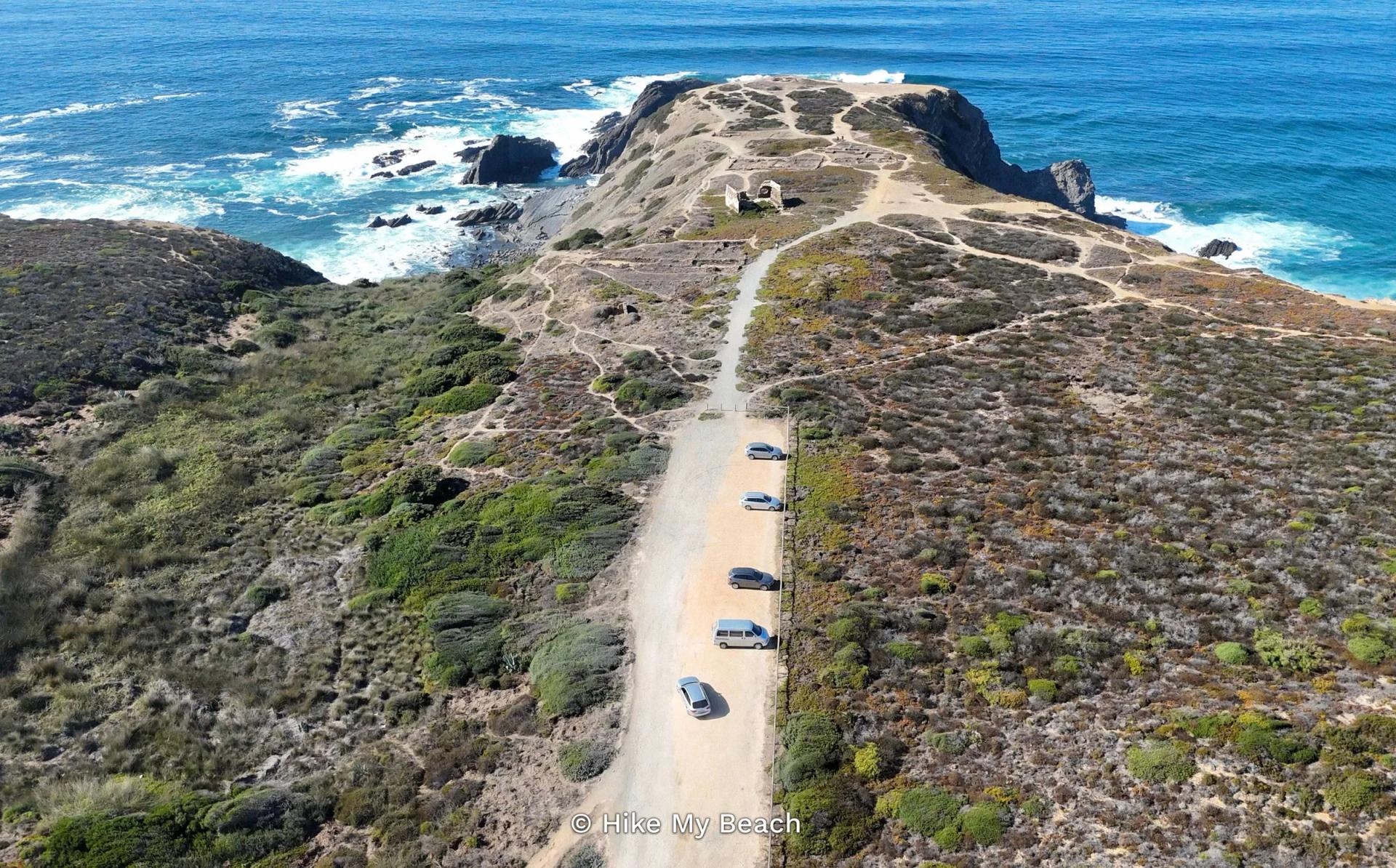
Tolls are the part that surprises most visitors. Portugal uses electronic tolls on many motorways, and the main systems are Via Verde and EasyToll. You can register the rental's plate and a payment card with EasyToll; if you don't, you can pay at a CTT post office within 15 working days. Rental companies may add a daily transponder fee and an administrative fee for unpaid tolls, so ask at pick-up how they handle them.
Book a one-way rental if you do not want to return to Porto, and ask about the drop-off fee first. Check current road and weather conditions before long mountain or coastal drives.
What a Portugal road trip costs
The highest costs on this route are fuel, tolls, beds, and food. We used current data for fuel and tolls, and we marked which numbers are our own.
Fuel and tolls
Fuel is the cost that moves most from week to week. According to the European Commission's weekly bulletin, summarized by Fuel Prices Europe, the average price on 5 October 2026 was €2.081 per liter of petrol and €2.155 per liter of diesel. A compact car that uses 6 liters per 100 km needs about 60 liters per 1,000 km, which is roughly €125 in petrol.
Tolls depend on the roads you choose. The toll table from Fuel Prices Europe lists these prices for a standard car:
Road | Section | Price |
A1 | Lisbon to Porto, full route | €25.05 |
A2 | Lisbon to Algarve (Paderne) | €23.80 |
A8 | Tornada and Bombarral toll plazas | €2.30 and €4.90 |
A41 | Porto outer ring | €2.85 |
A28, A29 | Porto to Viana, Vila Nova de Gaia to Estarreja | Free |
Food
Food is the cost you control most on this route, and supermarket prices are typically lower than in many Western European countries, although it is more expensive than in Spain, for example. Lisbon and tourist areas cost more than small towns, so treat the ranges below as a guide.
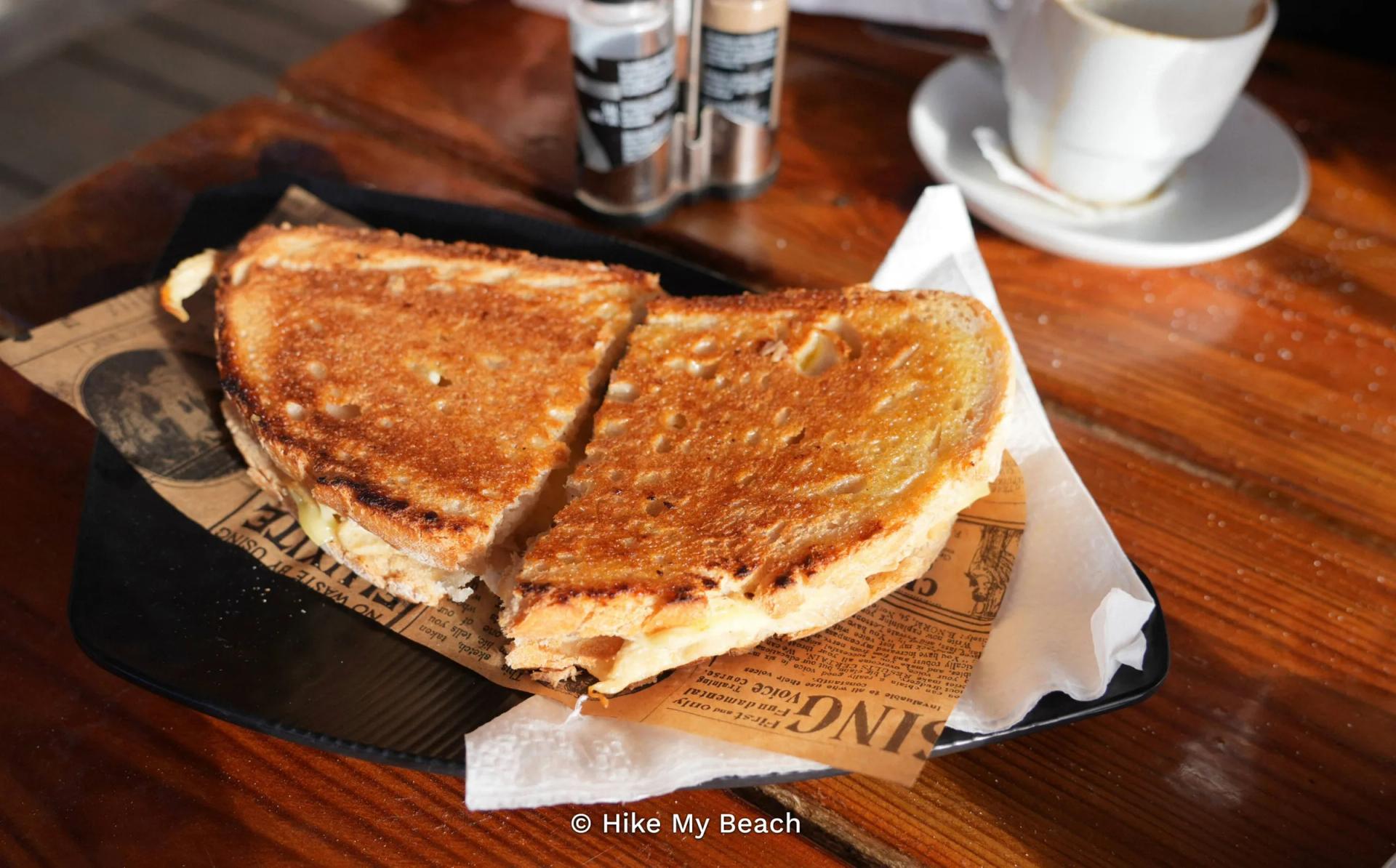
Most restaurant meals fall between €15 and €25 per person, and a mid-range dinner with drinks costs about €20 to €35 per person.
See our tips on if you want to cut the bill further.
Summing up our Portugal road trip
If you only have a week, start in Peneda-Gerês, leave Lisbon for the middle, and finish at Sagres, and give yourself 10 days if you want Braga, Sintra, and time on the beach. For the best road trip Portugal can offer in a week, book your nights early, start every day before 09:00, and keep the last day free for the coastal drive.
The full video is coming soon, and it will have footage we cannot describe in text, including the drone shots over Peneda-Gerês and the descent to Praia da Ursa. Prices, toll rules, and opening hours change, so check current conditions and official sources before each leg of your trip.
You may also like
You may also like


get news & updates
get news & updates
Subscribe to our newsletter for inspiration, advice, updates, and news. Don’t worry – we won’t bother you too often.