Loading...
Remote Work & LifeMorning yoga
Sia B.
%2520(1).jpg&w=64&q=75)
Jul 29, 2026
How Morning Yoga Helped Me Live Through a Teacher’s Workweek
Remote Work & Life6 minutes read


More than a decade ago, I worked as an English teacher at a public state school in my native town. Those were hard times. I graduated from the university, struggled to find a job, and didn’t know what to do next.
Skipping long explanations, I eventually was employed as a school teacher, with an extremely low salary and even worse working conditions. The working day wasn’t too long. But because of the huge stress I experienced daily, it felt like an infernal nightmare that lasted an eternity.
I couldn't skip this job because of family obligations and had to come up with a solution to live through it. So, I started practicing yoga.
I can’t remember now how I came to this, to be honest. Eventually, each working day began with 10-15 minutes of morning practice to help me breathe out and accept my destiny for the day.
The result arrived almost immediately. I felt much calmer and balanced and my stress response became more solid. Of course, yoga didn’t make my job easier. What changed is my attitude to the situation and my ability to handle stress triggers.
Why Morning Yoga Routine Makes Such a Tangible Impact On People
It didn't take long for me to realize how helpful a simple yoga flow can be. It occurred that it wasn’t just my attitude but some scientific facts that only confirmed what I felt.
Calming the Nervous System
Yoga activates the parasympathetic nervous system, also called the “rest and digest” mode. Studies show that slow and controlled breathing and mindful movement reduce cortisol, the stress hormone. This prevents your body from staying in a fight-or-flight state for too long, making it easier to remain calm throughout the day.
Enhancing Mental Clarity
A busy mind jumps from one worry to another, but yoga teaches you to bring your attention back to the present. Yoga exercise increases blood flow and oxygen delivery to the brain, improving cognitive function. It doesn’t eliminate distractions, but it strengthens the brain’s ability to process information and stay focused.
Building Emotional Endurance
Yoga influences the limbic system — the part of the brain responsible for processing emotions. Instead of instantly feeling frustrated, exhausted, or hopeless, you create a little space between you and the situation. That space gives you the power to choose how you respond and develop a more measured response.
Relieving Physical Tension
Stress doesn’t just affect the mind, but it settles in the body. Yoga stretches and strengthens muscles, reducing tension in common problem areas like the shoulders, neck, and lower back. Morning yoga helps release that tension before it builds up, making it easier to move through the day without feeling physically weighed down.
Creating a Sense of Order
Morning yoga serves as an anchor habit, helping you do something predictable before you arrive in a stressful environment. Starting the day with structured movement helps you show up for yourself, feel more in control, and survive through the day.
Simple Morning Yoga Flow That Used To Save My Workdays
Since I was a beginner who had never practiced before, my flow was pretty simple. I found a one-hour lesson on YouTube that literally said “Yoga for beginners”, and it was wonderful.
Since my schedule won't allow me to take the full practice each morning, I simply went with a warm-up and sun salutation on workdays and did the full complex every now and then on weekends.
Short Breathing Session
Every practice started with a few minutes of deep breathing. This helped me transition from sleep to wakefulness, clear my mind, and set a calm tone for the day. Controlled breathing, or pranayama, is scientifically proven to regulate the nervous system, lower stress levels, and improve concentration — exactly what I needed before facing the classroom.
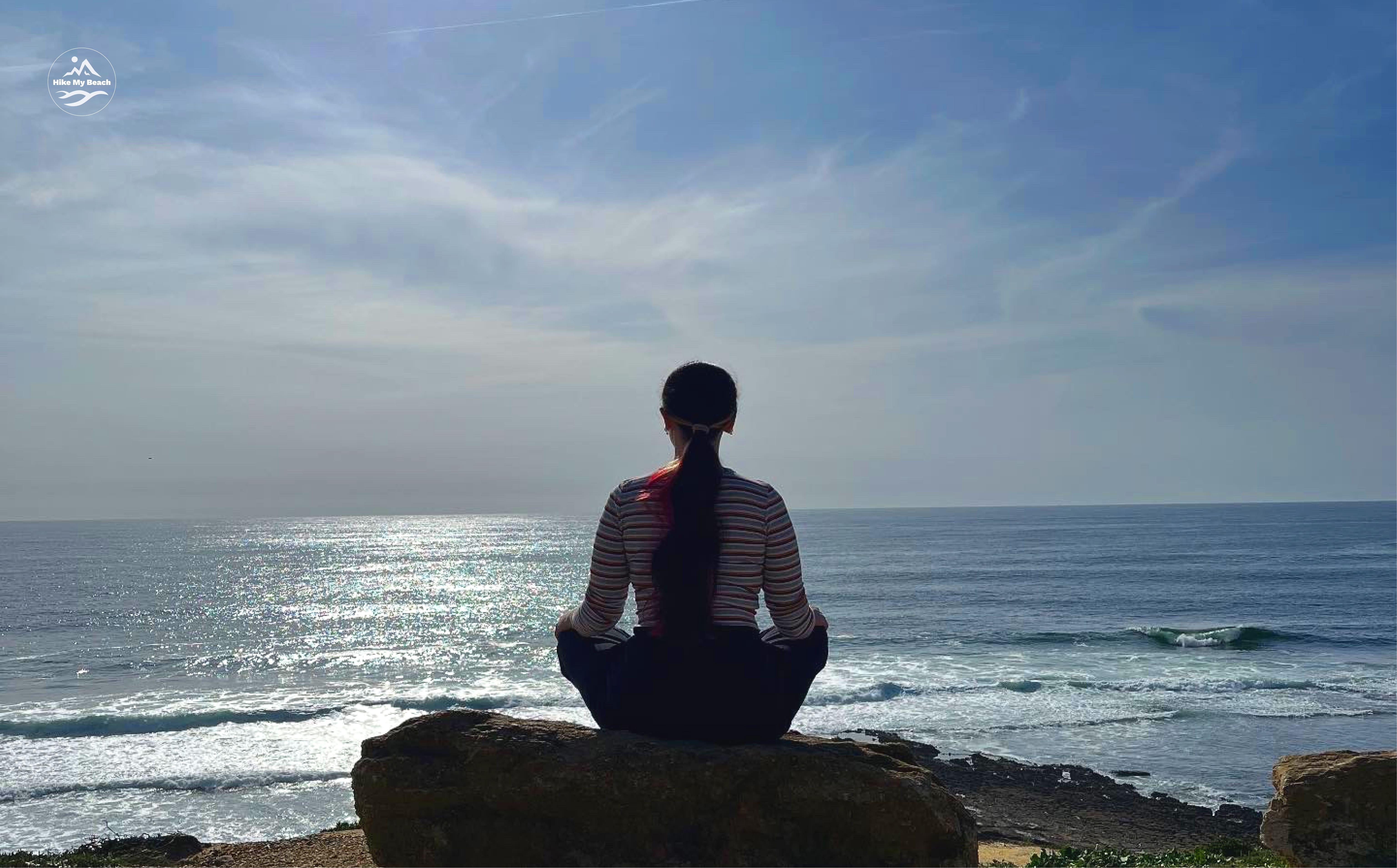
Here’s a simple way to do pranayama at home :
- Sit comfortably on the floor with a straight spine.
- Close your eyes and take a deep breath through your nose, filling your lungs completely.
- Hold your breath for a second, then exhale slowly through your nose.
- Repeat this for a few minutes, keeping your breath slow and steady.
You can also try alternate nostril breathing:
- Use your thumb to close your right nostril and inhale through the left.
- Switch nostrils, exhaling through the right and inhaling again.
- Continue for a minute or two.
This simple exercise made me feel more focused and grounded before starting the day.
Sun Salutation
The core of my morning routine was the classic Sun Salutation or Surya Namaskar. It’s a sequence of poses that warms up the body, stretches major muscle groups, and gently wakes up the nervous system.
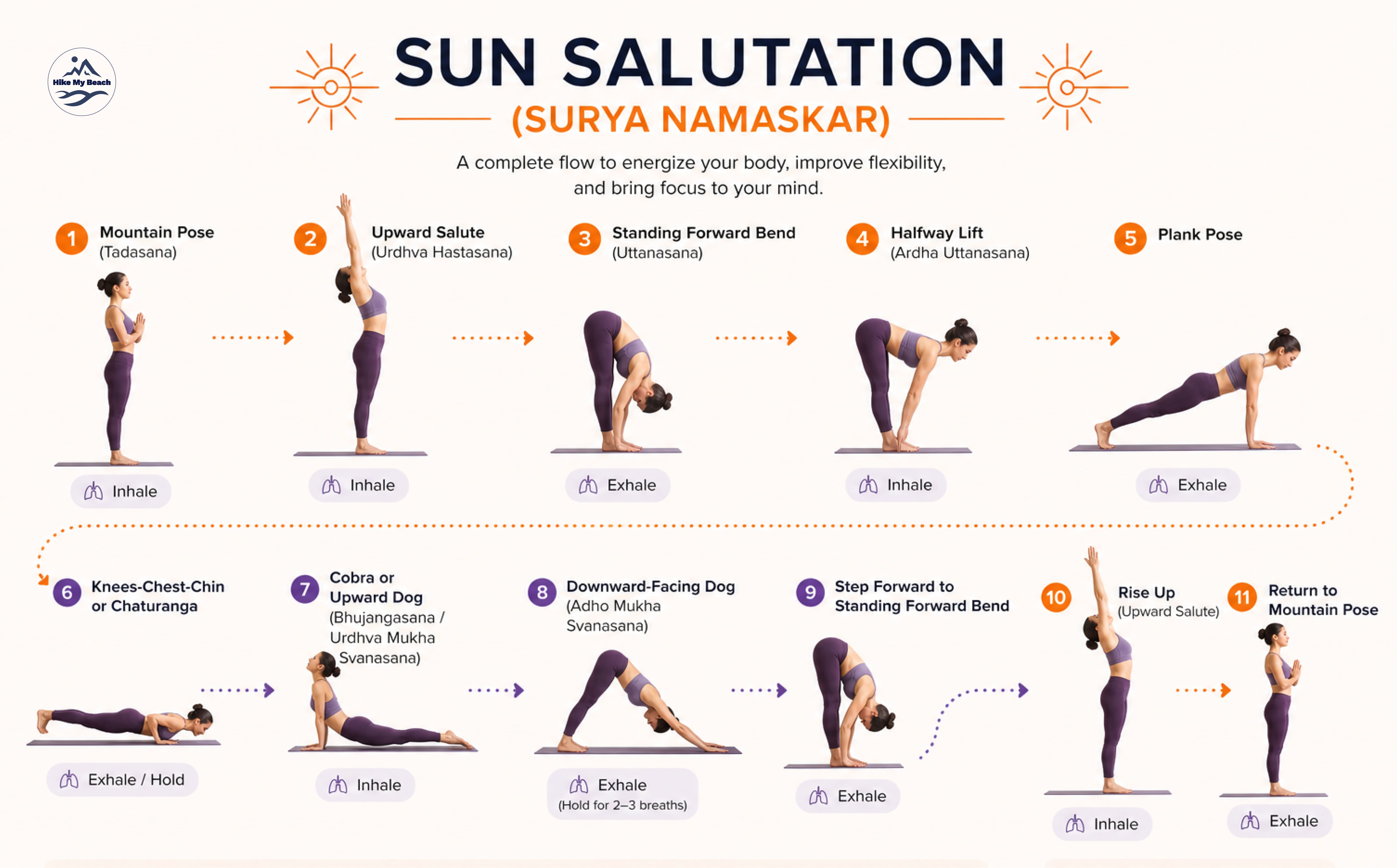
Here’s how to do Surya Namaskar:
- Mountain Pose (Tadasana) – Stand tall with feet together, hands in prayer position. Take a deep breath in.
- Upward Salute (Urdhva Hastasana) – Inhale, stretch your arms overhead, and look up.
- Standing Forward Bend (Uttanasana) – Exhale, bend forward, bringing hands toward the floor.
- Halfway Lift (Ardha Uttanasana) – Inhale, lift halfway, and straighten your back.
- Plank Pose – Exhale, step both feet back into a push-up position. Hold for a moment.
- Knees-Chest-Chin or Chaturanga – Lower down, keeping elbows close to your body.
- Cobra or Upward Dog (Bhujangasana/Urdhva Mukha Svanasana) – Inhale, lift your chest, keeping your hands under your shoulders.
- Downward-Facing Dog (Adho Mukha Svanasana) – Exhale, lift your hips, forming an upside-down V shape. Hold for a few breaths.
- Step Forward to Standing Forward Bend – Step one foot forward, then the other, and fold over your legs.
- Rise Up – Inhale, stretch your arms up again.
- Return to Mountain Pose – Exhale, bring your hands to prayer position.
You don’t need 24 rounds, as some bloggers say. Even a few repetitions can make a difference in how you feel throughout the day.
Morning Yoga Stretches
To relieve tension and improve flexibility, I did simple stretches that targeted areas where stress builds up the most — shoulders and back. This short complex will be especially useful if you work remotely or have no time to visit the gym.
Try this simple flow:
- Seated Forward Bend (Paschimottanasana) – Sit with legs extended, reach forward, and stretch your hamstrings and back. Hold for 20-30 seconds.
- Cat-Cow Stretch (Marjaryasana-Bitilasana) – On hands and knees, alternate between arching and rounding your back to release tension in your spine. Repeat 5-10 times.
- Seated Spinal Twist (Ardha Matsyendrasana) – Sit with one leg crossed over the other and twist your torso to stretch the spine. Hold for 20 seconds on each side.
- Neck & Shoulder Stretch – Tilt your head from side to side and gently roll your shoulders to release tension.
Stability Drills
Adding a few simple stability exercises to my routine helped improve my posture, balance, and focus. These movements engaged my core muscles, which not only made me physically stronger but also improved my ability to stay steady, both on my feet and in my mind.
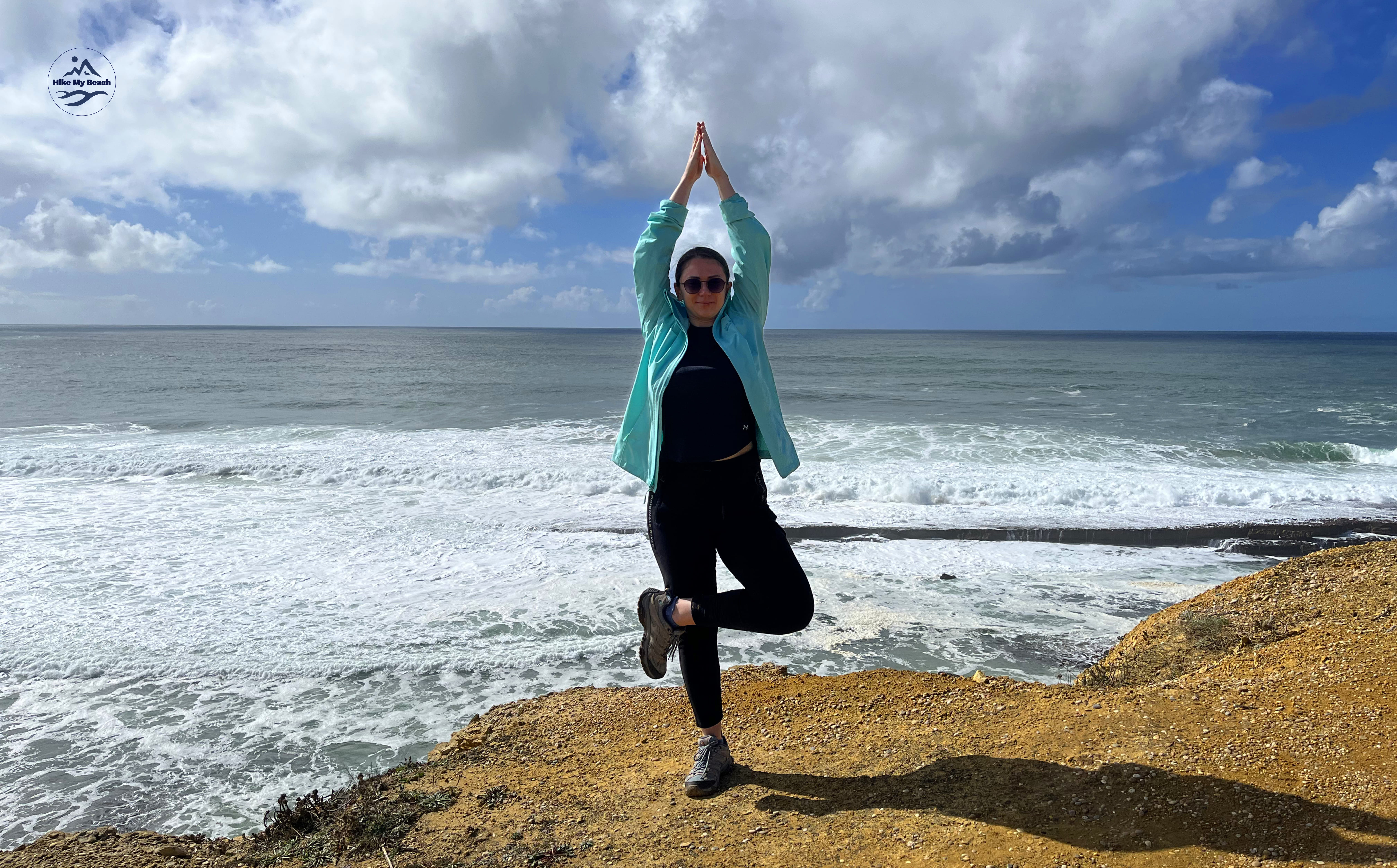
Tree Pose or Vrikshasana
This simple standing pose helped me develop balance and focus. Here’s how to do it:
- Stand tall with feet hip-width apart.
- Shift your weight onto your left foot and slowly lift your right foot, placing it on the inner thigh or calf (avoid the knee).
- Bring your hands together in a prayer position at your chest or extend them overhead.
- Keep your gaze steady and engage your core to maintain balance.
- Hold for 30 seconds, then switch sides.
Chair pose
Chair Pose is one of the best yoga poses for building lower body strength, improving balance, and increasing endurance. It engages the legs, core, and back, helping to stabilize the body while also improving posture.
Here’s what to do:
- Start in Mountain Pose (Tadasana) – Stand with your feet together or hip-width apart, arms at your sides. Keep your spine tall and shoulders relaxed.
- Inhale and Raise Your Arms – Stretch your arms overhead with palms facing each other or touching. Keep your shoulders away from your ears.
- Exhale and Bend Your Knees – Lower your hips as if sitting in an invisible chair. Keep your weight in your heels and ensure your knees don’t go past your toes.
- Engage Your Core – Tuck your tailbone slightly, keep your back straight, and avoid overarching your lower back.
- Hold the Pose – Stay in this position for 20–30 seconds, breathing steadily. If you feel strong, extend the hold up to a minute.
- Release Gently – Inhale, straighten your legs, and return to Mountain Pose.
Bonus Exercise: Headstand
Let me make it clear: this is not a beginner-friendly exercise, and I didn’t do it regularly. The video included a headstand asana, which inspired me to practice. And I nailed it! However, I still need good preparation and concentration before I can repeat it.
Helpful Tip
Important! Do this pose only with proper preparation. Preferably, hire a professional instructor to master this asana safely.How to headstand:
- Start in a Kneeling Position – Interlace your fingers and place your forearms on the ground.
- Place the Crown of Your Head on the Mat – Rest it between your hands for stability.
- Lift Your Hips and Walk Your Feet Closer – Engage your core and slowly lift your legs upward.
- Lift legs one by one — start lifting your right leg, then go down. Do the same with the left leg.
- Find Balance and Hold – Once stable, straighten your legs and engage your muscles to stay steady.
- Come Down Slowly – Lower one leg at a time, keeping control to avoid strain.
A headstand requires full-body control, deep concentration, and patience, all of which translate into better focus and resilience in my daily life. Even though I don’t practice it every day, the sense of achievement it gave me remains one of my favorite yoga milestones.
Summing Up
If you think that yoga turned me into a successful teacher, that’s not quite the case. I quit that job after six months and never looked back. But yoga helped me understand that balance is something you build within yourself.
Through morning yoga, I learned how to breathe through discomfort, stay present in tough moments, and regain control when everything felt hopeless. Now, when life gets stressful, I return to the mat — not to escape my problems, but to remind myself that stability starts from within.
get news & updates
get news & updates
Subscribe to our newsletter for inspiration, advice, updates, and news. Don’t worry – we won’t bother you too often.